I had not written much. After Western States 100, Wasatch was my next biggest huddle to get over. I was not even remotely confident I had it in me to do the grand slam.
By any measurement, Wasatch is hard. I read about it and I watched enough Youtube videos. There is not enough training one can do to have the experience running at 10000 ft high and climbing 24,000 ft of elevation especially near where I live near sea level.
I was concern about running in the high elevation. I spoke with couple people in my running club who has gone to Wasatch before. Some went out a few weeks before. One gave me the statistics of how long it takes the body to acclimate. And he basically said, I could show up Wednesday and I would be fine.
I took a gamble, since I don’t have two weeks or even one week. Hotel cost would add up quickly.
My crew and I arrived in Salt Lake City two nights before i.e., Wednesday night. Looking back, I wish I arrived a week earlier since I traveled for Labor Day anyway, so the cost, was only couple more nights for hotel. I think the best place to stay at would be Brighton, which was at 8000 ft.
Our location at Layton (near Kaysville) was not bad (3000 ft). It was actually a blessing since it was actually only 15 minutes from the start and 30 minutes from the airport. It was about 90 minutes from the finish.
The next day we dropped off my drop (supply) bags (I packed some change of clothes and socks, and warm clothes). I had three, for Big Mountain, Lambs Canyon, and Upper Big Water. I did not have one at Brighton because I would have my crew there. I have my crew at Big Mountain and Lambs too, but these two locations are too important, if my crew missed me, I would be screwed, (too cold to run without night gear).
Then we went to couple places on the race course, including the start, Lambs aid station and Brighton aid station. Because each location was far apart (like an hour or more), before long the day was over. We did not have enough time to check out Big mountain, Alexander, Washington Park or the finish, or do a small training run at Bontiful B etc. Having three more days would have been ideal. We also did some shopping beforehand.
I was blessed in that, a guy I met at a local running club referred me to his friend, Sean, who would be my pacer at the race. I would not able to have a smooth race if not for my team of pacers and crew.
The night before, we went out for dinner at a Korean BBQ, which was a first for me at 100 mile race, but it provided me ample of calories.
It was my first time meeting my pacer. Sean fed me well. Sean had met Caroline, my crew chief, prior in former running events.
Sean asked what things I think I would need and he would provide. I said I could not find my winter running gear (cap, and gloves), so he brought those along. It was not too cold but at night it did get cold enough. Those gloves and cap kept me warm.
Next morning was the race. We woke up around 3 AM. Note the race is unusual that the start time was on a Friday (and not Saturday). Weather was typical good, blue sky, with very little wind. We showed up an hour before 5. I had a can of Cambell soup for breakfast.
There were very little fanfare, no race briefing, no music, no celebration. I did not know who was the race director until few hours into the race at an aid station called John Grobben’s Shed. Some old timers filled me in about the lores and factoids.
We staged at a parking lot by the trailhead. I started in the rear as typically. It finally sank in of how tough the course was as I started climbing the first 8 miles.
My friend Wayne also ran. We were pretty much together in the early phase until Lambs (9 pm). He was a stronger runner and I did not want to hold him back.
We climbed the first eight miles with no sight indicating the end. We actually knew where the end was because we can see from the parking lot up toward the radio/radar station at the peak. It took us several hours before we arrived there.
As we climbed, I can see those who could and who couldn’t do it around me. Of course, the front runners were strong. Those in the mid pack too were strong. Wayne was part of that group. I was at the tail end, like the last dozen. And we could see everyone were all walking up, and not just normally walking, but extremely slow one step at a time. Even then, some had to double over to breath from time to time. I was blessed with a strong body that I did not need to stop but maybe twice.
The attitude was affecting some. Some seemed unable to go on. You could see they started to lose their footing as fatique set in. I asked them to take a break and they did and they let me pass.
Once we got to the ridgeline, it was easier. The trail was wide and we all starting running in an easy trot. I ran with Mary from Washington, a runner my friend talked with before the start. She was strong and I had no doubt that she would finish. We passed some older folks and arrived at the aid station together (John’s Shed, RD). The race director was there serving us drinks. Mary then took off running, but I needed more time to catch my breath. I wouldn’t see her again.
The rest of the morning and early afternoon, the race course took us up to even higher mountains, like at Session Take Off. The scenery was something I only have seen in movies, like in the Lord of the Ring or The Sound of Music. It was stunningly beautiful. We felt blessed being just a few of us given the chance to run across those mountains. The race motto, 100 miles of heaven and hell. We were in heaven.
We climbed one peak after another. The Big Mountain was the last summit before we descended to the first crewed aid station also named Big Mountain AS.
My crew, Caroline was waiting for me as I arrived. She probably was there the last 8 hours. I reached it at 3:45 pm. I would not see her again until 9 pm.
Wayne, a fellow friend and runner had arrived probably 10-15 minutes ahead of me. He was still there when I arrived. Wayne initially suggested he would pace me from mile 70 onward at Brighton. I was hoping for that too, but our race pace was too different. We were not sure who would arrive at Brighton first. In the end, I gained like 45 minutes ahead of Wayne, so the plan was not workable. By the way, Wayne provided me his pace chart, and I used it.
I left the Big Mountain thinking I had everything I needed. Apparently the afternoon was hotter than expected. Future, Wasatch runners, day time is Hot! Big Mountain is Very Hot! I finished all my water in a mile or two after I left and I was still hungry and thirsty. This was like 13 miles, which took me like 5 hours to get through. I regretted I did not stay long enough and sufferred while out on the trail. I rewatched some youtube videos, they said one should not rush through the first crew aid station at Big Mountain. Indeed. It was my mistake.
I took my frustration out on my crew. One thing I needed and failed to receive enough fluid and food before I left. I was calorie deficient, not having been eaten much because the distance between earlier aid stations were 10-11 miles apart, so I did not have the recommended calories (300 per 20 minutes, equivalent to a gel pack, 3 packs every hour). Basically, I have not eaten the whole day. A crew station is a place to get some real good food.
While the trail from mile 30-45 was generally runable, I was not having fun. Once I reached Alexander, the Aid station before my next crew location at Lambs, I sent a list of tasks to my crew, also, I was a bit ahead pace (an hour). I would like my pacer to know that. My crew chief arranged all that while I was at Alexander.
I arrived at Alexander with Wayne again. This time I stayed awhile to get enough fluid in me as well ate my fill. It was my second mistake of eating too much in too short a time that I did not feel good by the time I left. From Alexander to Lamb’s Canyon is generally runnable. I was targeting to arrive Lambs by 8 pm. However, I was too full to run. Sun was setting and it was cooler now. So I arrived at Lamb’s after dark at 9 pm.
I met up two fellow grand slammers (Berg and Eli). Eli is a stronger runner, but he was cramping up. He said he stayed over an hour ar Big Mountain. He had expected to pass Lambs an hour or two ago before nightfall but now caught in the dark without a headlamp.
I lended mine to him since I carried two (one from the morning, and one I just picked up at Big Mountain). I usually use two on my run. I knew I was a slow runner and had expected to arrive at Big mountain at 7pm and Lambs after 10 pm, so I needed all the light early. Eli was grateful. I might have saved his race. Imagine he had to descend 2-3 miles to the aid station in the dark, but I am sure he could have double up with another runner, but sometimes that is still hard.
At Lambs, my crew and pacer were ready for me. I was tired but they got me ready for the night. I had blister forming on one of my toes. My crew (Caroline) cleaned up my feet and taped it. Sean got me plenty of food and drink. I put on an extra shirt and jacket for the night. We were then on our way. I felt proud, we only used about 10 minutes. My crew took care of my cramping. The leg cramp did not come back at all, even after I finished the next day.
From Lambs to Brighton was just one humongous climb, like for 9 hours. It was good having a pacer. Sean kept me engaged. At each aid station he took care of my needs before attending his own. He helped keeping my stop at the aid station to as short as possible. We reached Desolate Lake I think, and the aid station had a nice warm fire going and five or six runners were sitting around. We could not stay too long. Sean reminded me to go. He got a coffee for me and we headed off.
We continued to climb until we reached Scott (?) Pass. It was the highest point in the race, I think. I did not remember much afterward.
There must have been a long descent. At times we passed other runners. There was (#87) he kept with me all the way using me as his pacer. It bothered me when someone constantly hiking behind me, but since he did not want to pass, over time I accepted his presence.
Initially, my goal was to reach Brighton by 6 am. While nearing Brighton, I was doing mental math in my mind, and noted I needed to run 33.3 miles at every 12 hours. So by 5 am on Saturday, I should have reached mile 66.6. I felt I needed to reach Brighton, mile 69.6, by 5:45 am, in order to be on pace. So Sean and I picked up our pace. We reached Brighton around 5:35. I told Sean, I had to leave the station by 5:45. (my watched was 5 minutes fast, so I think I left actually left at 5:40). I only used like 5 minutes.
I had expected my crew to have my stuff ready for me at Brighton. There was a miscommunication because my crew never knew I needed help and what kinds of help.
As I came in the station, my clothes, a change of socks, were in the crew’s car. It was too late to grab them. I wanted to fix my feet because it seemed more blisters were about to form. Sean did what he could, he made sure I had enough food and fluid before I leave. Whereas about my feet, I just had to tough it out for the final 30 miles. My crew said it as much since I need to make cutoffs, I must go.
This I knew, but in gamer’s term, I was tilted (mad/frustrated). It was a fire raging in me for much of the day for the next 9 ish hours.
I had expected the last 30 miles to be easier. I did not check the elevation chart. I knew we had one big climb. We did. Ant Knob aid station too had a very big climb and apparently that did not show up on the elevation chart.
I reached Pole Line. Pole Line too had a decent climb. And it was way farther than I anticipated like 3-4 miles longer. It might have been in my head and I was getting tired. From there to Decker was about 11 miles. It was known as the Dive and Plunge. For fast sub 24 hour runners, this was a dangerous section. Even in day time, it was hard running downhill, because one misstep would mean plunging many feet down the mountain. I reached one more aid station at mile 88.
By then, I started worry that I might not have enough time to reach the finish before 5 pm. It was 1:30 pm. I had 3.5 hours for the final 12 miles. The math was very hard to do in my head at the time. I knew I needed to run to make it. Earlier in the morning, I could go at 21 min pace and still would finish. Now, I had to go at 17 minute pace.
I wanted to reach the Top-of-the-Wall (final 8 miles) by 2:30 pm. That means I needed to do 4 miles in 45 minutes. The sun was very hot at this time. Everyone around me was running. I sprinted down with them and arrived at 2:15, meaning I am in the game. Caroline was there waiting to pace me of the final 8 miles. I did ask, but did not expect that she would since she had a slight injury. I had expected the last 8 miles to be on the road but there were 3 miles of trail left and we had some serious descending (maybe 1000 ft or more). I was afraid the trail might be too hard for her. Caroline seemed to have a blast of time. I just followed.
It was final a relief when we arrived at the aid station 5 miles out. We had 2 hours left on the clock. By now, we knew, we could walk and finish.
I did not want to walk, fearing the course might be longer (some 100 mile races are 104 miles long). Caroline assured me not this course. The last five miles were on the road but we had rolling hills, with a net down hill run. It seemed forever before I saw the finish line. I finished at 35:27. Happy to have it done.
We had a small gathering. I did not know that # 87 finished after me. Eli finished couple minutes ahead. I thought I was the last grand slammer to finish but there was another who came in after me. Berg was still at the finish. Wayne had dropped at mile 92, unfortunately. He met us back at the finish. The race closed at 5 pm. I went and collected my drop bags. There were food out but I did not feel like eating. The race officials were friendly. A few came by and chatted with me. Berg and I went to collect our grand slam trophy and had our photos taken.
It was surreal. I did the grand slam. It was an incredible run. My phone blew up with many cheering messages. I had it on airplane mode most of the time until I had finished. Some had followed my journey since Western States. Some followed my live tracking the whole Saturday and night before. I was cutting close to cutoff at some point, giving many of my followers a scare. We all breathed a breath of relief once I crossed through the finish line.
I accomplished only a few (14) had done this year. A lot people run a 100 miler but only a handful went for a grand slam (in a given year). Nowaday, there are so many type of grand slams, but this one is the original and contain 4 of 5 oldest 100 mile races. So now my name is entered into the grand slam list as runner #418, listing along with many who were/are much more accomplished runners than me.
The start, up the slope over Kaysville (to the right, back of me). We were maybe a mile up from the trail. We explored the start line a day before the raceI wish I had taken more pictures because it was just so beautiful, though I was very focus to get the race done. Salt Lake City was the location for 2002 Winter Olympics
It was a race of the century for me, I probably need a lot of time separation to capture all that happened. I have done a few 100s and am doing the grand slam series, so I can’t say if Old Dominion is better or the C&O, or any ones of my hundos. This one definitely takes the cake. First, we devoted so much energy, in training, in marshalling support and crew. Second, the attention! Mentioning just Western States, there is no race like this. So to be able to finish it, was utterly amazing.
First off, I finished, coming in at 29:13:29. I am relieved. Mission accomplished.
The whole TL;DR is I struggled earlier on running behind my expected pace, and it seemed at times imposible for me to finish, because once you are behind the 30 hour cutoff it is very hard to claw your way back in. My troop and crew rallied with me through the night. I was able to cross the finish line the next day. It was an incredible feeling to experience the victory and to have lived the whole process to tell about it.
It was an interesting experience. It was definitely worth the raves and attention from around the world. The course was beautiful. We could overlooked some of it flaws like being dusty and at times double track jeep trails.
I am deeply grateful to be there, to make friends, to spend couple days with my crew and pacers. It was incredible and unbelievable. Maybe also to have made a difference in someone’s life.
As for training: Having an active training schedule helps. I did a bunch of hard races and training runs before this. I ran a lot of hills. My legs were ready. People warned me of quad failure and death march. My legs stayed strong until the end. During halfway, especially going up on Devil’s Thumb, I was cramping on my left shin. Once, I had some salt in me, the cramp went away and I could continue with the race.
Doing some of 100 mile races early in the year helped. It might not be a formula for other people to follow, but for me, I think it built up the endurance and leg muscles I needed. It was almost not enough. I did many 100s before, but this year, I truly dial in the formula that was right for me. You developed the sense of pacing, timing, and the efficiency of going through an aid station. So you can bring your best to the Western States.
I was able to dial in the crewing, pacing, and drop bags, etc. The support cast was a miracle. They were handpicked but they were also completely out of my control on race day. I did not know them well enough beforehand, yet they were there for me during my race, and did beyond what I asked for. I was lucky in a sense, we did not rehearse on crewing or pacing, and they just fell into place. More on this later.
Heat. I tried to train for the heat but I realized it was not enough. We were blessed that this year was one of the average temperature years (in 90s but not 100s). I had heat related issues but survived. I could have used an ice bandana and taken more ice water dumps. In the end, there was only so much you can do. It was way hotter out west than in the east and there was almost no way to totally train for it. Now, when I am back home in the east, the heat here, feels as if nothing.
Ideally, if I had more vacation time, I would arrive at the race a week or so beforehand and stay a week after to get the full experience. I had only a limited amount of paid time off, so I did not have the luxury of a long break. We flew in and ran and left as quickly as we arrived, like many other runners.
Due to limited time available, I arrived Thursday night in Sacramento. Friday was all blocked off for pre-race events, mainly bib pick up, drop bag delivery, and the race briefing.
At the bib pickup, I met couple running friends, Lisa and Keshia and Paul Jacob. There were 375 runners checking in, and out of these I ran into couple people that I know. There were a couple people from my home state or nearby states, but everyone was in a hurry to do their final preparation, so we did not have a little get together. We did take a photo together before the race start, even then, it was not complete.
I enjoyed the bib pickup. We were handed our bib and had the wrist band on. We had our picture taken. Then swags were given out, and there were a lot! There was also a shop to buy more swags. It was a buzz of activities. Because I signed up for the grand slam (running four classic 100 races (no Leadville for me, but all other races), I was recognized by the grand slam’s admin as he was handing me the race bracelet (sorry, I kept forgetting his name). I was a bit shock, like out of 375 runners, I was remembered and recognized.
Then, I dropped off my two drop bags. I plan to be crewless. So I placed a drop bag for the aid station at mile 62. I placed a drop bag at mile 78, for a shoe change after crossing the Rucky Chucky. Ideally, this race is better to have crew at various points on the course, but most locations are remote and is incovenience to get to, drop bags are preferred. As for me, because, I was behind pace, there was no time to stop at all. If you have to have a highly trained and efficient crew, you could pull it off, but then likely you would not be running from behind pace.
The pre-race briefing took place soon afterward. We filled up the whole plaza at Palisades Tahoe. I did not remember much of what was said. There was the introduction of the elite runners. It was what most people came to see. There were top 20 females and top 20 male runners. Any one of those had a good chance of getting first, though the favorites were as predicted to be Jim Walmsley and Katie Shide. I was not too in tune with the whos who. I recognized a few names. I did not know Sally McRae’s fans were making a big splash this year. “We are here for the Women’s Race” was one of the shirts I saw. It was where honor should be given to where honor is due. The elites ran a truly amazing race. Later, rewatching the livefeed, it was a gripping race. First place for men or female, were never in doubt but it was a close one for the top 2nd-5th position. As there were 375 runners, there were 375 stories. I love to read them all. I ran a couple of them already.
As a participant in the race, we were not aware how the race turn out at the front. I was totally oblivious even of the forest fire nearby. I was trying to run my own race.
The race meeting concluded in the early afternoon. Only thing left was to go bed early. Good thing for me was because I was from the East Coast, I could sleep at 5 pm local time and it would be like 8 pm back home.
My crew and I ate at our hotel (we stayed at a Casino) since I was too tired to drive into town, which was only 10 minutes from Reno. Originally, I wanted to explore a bit and have fun, but I was feeling tired by 5 pm. We had a good meal, the traditional pasta dinner for me. Thank you to my crew for taking me out! My success for the following day was likely due to the hearty dinner.
As with any races, I could not quite sleep much. By midnight local time, I was wide awake. So, I kept myself occupied until time to get up. Our hotel to the start line was about an hour away. By 3 am, we were on our way to the race since the race starts at 5 am, and I wanted to be on site by 4 am.
Staying far from the race site was not too big an issue, ideally we could stay at the Palisades, but I was not willing to pay 4-5x the price. Hotel goes up to thousand dollars. There was an Air-bnb within 10 minutes, still available during the week before the race, but it looks questionable. It was bunk bed, etc, a full house, price was reasonable, I was not willing to take the risk. Seems sus, when no one wants it. Note, I did not look for hotels until the final week. They say early birds get the worm. Personally, I think staying in Auburn would have been the best. Camping seemed to be an option, I, of course, did not want to camp. If by myself, sure, I would do so, but I wanted my crew too to have a good sleep. Lake Tahoe, about an hour away had inexpensive hotels, this could have been a good option, I did not choose it because, I prefer driving on interstate hwy in the early wee hours than over mountainous roads from Tahoe.
The atmosphere was alive when we arrived. Originally, I wanted to sleep in the car a bit since the walk from the parking lot to the start line was not too far. I figured I could snooze for 45-50 minutes before the start. But everyone was up and about. It was too tempting for me to go out and see what they were doing. I had a brief breakfast provided by the race. Muffins and coffee were on the menu. I brought my own breakfast (milkshake and croissant) but at the time, I did not had the appetite. Later, I regretted a bit of drinking down the shake. The sun soon started to rise, there was the faint morning predawn glow. It was as every bit seen from YouTube livefeed.
I remembered this exact moment last year when I was tuning into the Western States 100 start on YouTube. In a million years, I would not have dreamed I would be toeing the start. It felt surreal, here just a year later. The exact emotion at the time, was mixed. People said I am calm. My friend, and crew chief was with me. I wanted to feel the excitement like I usually do for other races, but here at Western States, I felt anticlimatic. OK, I was thinking to myself. It was a beautiful morning. The idea of me racing had not registered yet. After six months of training here I am. There were no more doubts if I was ready. Ready or not, I would have to do the race regardless how I feel. The start clock slowly counted down to 5 am.
There was a brief final race briefing beforehand but I could not make out what was said. I said, I plan to watch the livestream once I finished the race to hear what was said. John Trent told a story of a watch with no hands, meaning we should not worry about our cutoffs, or pacing, but instead enjoy our run at the moment, but unfortunately his tip was lost on me until afterward. He mentioned the two friends from North Carolina (whom I glat to also have met, Lisa and Keshia), to take care of each other. This too, would have been hard for me to do. I was too focus of saving myself out there. I regretted a bit I did not pace with some slower runners as I normally would (including Emily Clay, my personal hero in this race). I did help on two occasions when someone went off trail to call them back.
Then we were off once the clock reached zero. I started from the rear. As mentioned, I did not felt it was my race yet. I did not go out with urgency as many did. The course did not seem too crowded by the time I crossed it. We had a long 4 miles (3.5-3.7 miles according to some) climb up to the escarpment. It was truly remarkable up there. It was a slow process for me and others around my pace. I passed Keshia and Wael early on. Wael stayed with me a bit. My pace was not fast. Eventually, I got to the top, kind of behind pace I believed, but I wqs not worried. The split is available on the internet. Indeed, it was slower than I would like. I was behind pace but that was to be expected. I was hoping once I get into a running pace, I could make up time before the first aid station at Lyon Ridge.
Looking back, the trail was not any harder than what I had done before. About a group of dozen people passed me once we were on the single track trail. It was beautiful up on the ridge. I did not mind people passing me early on. Well, I was a bit irritable or snuffed by that because I believed I was moving at a good pace. People are like in traffic will sneak into every available space. You kind of had to smile to them, yes please go ahead. We were in bumper to bumper, so I think it is foolish to fight for position. I was willing to let my pace drifted a bit. Those who passed by seemed did not get very far.
So I stayed with them from behind the pack until we got to Lyon Ridge. I used the opportunity to get out the station as quickly as possible. I gained a bit of ground but the runners who stayed a bit longer caught back up not long later. I knew I was behind pace, but I felt also low in energy so I could not really pick up my feet and push and stayed in the back with some other runners. This was the high country. Normally, this was not me, but I had not run for in a while, so it took a bit of time to get my trail legs back. I did stumble quite a bit.
The famous Cougar Rock! I did not know at the time, this was probably the most technical section that needed a bit of hands and knees. Credit: Facchino Photography
The Second aid station came by, Red Star Ridge. My pace slowed down more than I would like. I am now near an hour behind pace. The split is available online. I just have no desire to look at them again, because they were too embarrasingly slow. Again I got out the station first, but others caught back up to me later on.
There was a nice descent to Duncan Canyon. Wael sped up and ran down hill and so did many others. At least I thought they sped up, but in actuality, it was my body slowing down. I knew I had to reach Duncan Canyon by 12:30, since that was our first official cutoff. My plan was to reach it before 11 am. That plan was not possible with the pace I was going. I knew I would have to push a bit or my race would be in trouble.
The sun was hot, now past noon. As I arrived at the Duncan Canyon aid station, the lady in front of me was experiencing some heat issue. They sent a medical staff on the trail, and he was asking her how she feel. She said she is having dizziness. She did not seem to do so well. I made note, and kept that in the back of my head. Got to watch out for the heat. Now I still had double layer on. People back home were saying, what is up with that! I was still heat training, mygoodness. I was not feeling good myself either. I had a bit of lightheadedness. My arrival time at the station was far off than I wanted. My time slipped further from my desired pace. I did some mental math that I might be at the cutoff by the time I get to Robinson Flat.
I took the humble pill that maybe this race was not for me. This was my first realization. They say to finish a 100 mile you should have to know your Why, the reason why you want to finish. Wael told me he wanted to fly his flag at the finish. I said, I wanted to arrive to see his flag. In my mind he was ahead of me and I promise to catch him (reel him in). I must have passed him at Duncan Canyon but to me Wael was still way in the front. This was my original goal. Later, it was changed to I would like a fast run with my pacers to Auburn.
The first three aid stations, were mostly on the down hill, now it was a climb. It was past noon. I just cross a creek. My eyes were getting dark so I sat down on a rock by the side of the trail. 5-6 runners passed me and asked if I needed help. I motioned to them I was alright. I was trying to remove a layer, so I could breath better.
Then there was a runner, unfortunately, I don’t remember his name or bib, but I was behind him most of the day. So he passed me and I said, I needed him again to pace me to Robinson Flat. It is kind of a joke because no one would be willing to really pace someone. I latched on his pace and we kind of arrived to at next station together. I had a stronger uphill strength by now. So I did eventually left him. He was floundering like I was.
When I was near Robinson Flat, I heard horn blasts. This race has a system of three horn blast means 20 minutes before closing, 2 blasts for 10 minutes, 1 blast means time up — something like that. As I entered the station, the volunteer told me I had 10 minutes before the station closes. Ideally, we should not be hearing them at all, because it means we were really in trouble if we do hear it.
I really did not feel good at the time. I think looking back I had some heat exhaustion issue. I felt someone had punched me in the chest and stomach. I had trouble breathing (my breathing was shallow). I could not eat much. I felt I wanted to throw up (It did not happen for another 4 hours, so it stuck in between the whole time). I think at Miller’s Defeat, they offerred me Tums and that helped relieved the pressure a bit.
They filled up my water bladder with ice and water. I was sprayed with water. I packed away some food to go. Actually, I wanted to quit and asked if my crew chief could drive me back home or where ever, but I got a quick answer no. Her logic makes sense. I still have time on the clock, and I should run until I was pulled from the race. She will have my pacer to meet me at Michigan Bluff instead of Foresthill as originally planned. It seemed unlikely I would arrive before 8 pm. We could only have a pacer at Michigan Bluff if it is after 8 pm. Because, time was short, I did not have time to think about it. It was either stay or go. I felt, I could still take another step, so I went out. The words that really got me going was “they (Susan and Christy) were waiting for me down there (bottom of the Canyon, at Rucky Chucky)”. I did not want to fail them. Note, it would take another 14 hours for me to get there.
I was not even thinking that far at the time. My job was to make before the cut at the next station. I kind of had a strong feeling that finishing the race was impossible by now. Some commented on my tenacity or resilience, no, I don’t think I had any of that. I just did not want to disappoint my teammates. We spent so much energy to get here and there was still a fighting chance. I shouldn’t go out without a fight.
It was 2 pm. I started to feel a bit better once I left the station. This next 100k is the section I have done the training on during the Memorial Weekend. It is mostly downhill. My pace was a much better then and soon I caught up to people ahead of me. There were a dozen or so runners. I kept with them pretty much for next 6-7 hours. Not that I did not want to pass them, but they were equally as resilient.
We arrived to at Miller’s Defeat. I did the same as previous station, trying to be quick. Getting water if necessary and to move out once done. I was gaining back some time on the clock, minute by minute, going from 10 minutes from the cutoff to 15 minutes.
Dusty Corners was next. I did not pace with any one but sometimes I surged ahead and only to be passed by others when they regained their strength. Looking back, I wish I have taken down names of people I was with. We felt equally same of being in the same boat of chasing our cutoffs.
After Dusty Corners was Last Chance. I pretty much outran the people I was with to be here. I gained an extra 20 minutes, about 25 minutes ahead of the station cutoff but maybe 40 minutes behind the 30 hour cutoff. I was not thinking about the 30 hour cutoff like how would I catch back up, because, the station cutoff was more the immediate concern.
After Last Chance is the swinging bridge. It is 1.5 mile down and then many miles up to Devils Thumb. Maybe like 4-5 miles. I handled the down hill pretty well and passed maybe 10 or so more people. You could say I went all out. I might have the idea, I could catch back onto the 30 hour pace. I might have pushed a bit too hard.
Then came the climb up to Devil’s Thumb. Many asked me about the heat in the Canyon. Yes, it was hot but I arrived there around 6 pm where the worst already passed. I was lucky in that respect. If I arrived at 3-4 pm, it might have been a different story. Now the climb, and it was one of most wicked climb other than the escarpment at the beginning.
I walked ten or so steps and I felt lightheaded. Note, I did the training here, and climbed well during my training. Now it was a different me. The guy in front of me was same. He sat down at one of the switchbacks. I too was trying to find a rock to sit. It was slow going. After a few steps I had to stop and take a break. I never felt this tiring. I was out of breath. My chest was pressing in. My stomach was turning, ten times worse than before at Robinson Flat. This time, I felt the stuff was about to explode out and I was trying to contain it. Also, I wanted to poop badly. I blamed the protein shake I had before the race!
Because of my slow pace, many runners were passing me. I normally take pride of my strong climbing ability but not today.
Soon I went to the side of the trail and started puking. Everything I ate before came out. They were mostly fluid. My mouth did not have the bitter aftertaste, and I think they were the energy drink I had. I like the sweet flavor. Everything seemed to be just water and a few pieces of water mellon. I soon felt much better once I threw up. I got my energy back. It felt very good. It was a great reset. I was not sure where the energy came from. It got me up to the aid station. I no longer felt bloated.
I hear the horn blast, not sure it was three or two, likely two. Basically I had about 10 minutes left. I told a volunteer I wanted to quit. I did not even go to the food station but sat on one of the chairs they had for probably spectators. A few people came to attend to me. They said let us fill up your water. The guy asked if I wanted to change shoes/socks. I said sure. They cleaned my feet. Got my water filled. They put some ice. They basically ignored that I wanted to quit and prepared me for going back out. An older guy was telling me some stories, basically to persevere. The younger guy cut in and said there is no time for me to listen to that, but that they hope see me at Placer High the next day.
They were so positive that I would finish. So they rushed me out the station. I forgot all about pooping. If it got worse, then, I’d poop on the trail or in my pants and we would deal with it at the next station. I know if I’ve gone to the porta johns, I might not make out of the aid station before the cutoff here. I was glad, my body recovered just when I really needed it. Actually, we met a guy on my way out, who left the station earlier and then came back. We asked, are you giving up! We tried to convince him, he had three hours left (to get to Michigan Bluff).
There were five or six other runners leaving with me. So I had some company. I tried to keep their pace. Soon though we were all spreaded apart. The trail became easier down to Eldorado Creek. I love the down hill. I caught up to some earlier people. I saved a lady here from going off trail. This time, I tried to reign in my pace and not go too hot like before the Devil’s Thumb climb.
This part was actually fun to run, except I was chasing time again. I made it to Eldorado Creek. I filled up and took some gummies and food I felt I could eat. I don’t remember much but was told that 9:20 was the station closing time. I mistakenly believed that the next station would be closed at 9:20. I left at 8:00 pm. So I had only 1:20 to get up to the top. I told myself I needed to get myself up there by 9 pm. This is a big climb up to Michigan Bluff. It was almost as worse as Devil’s Thumb.
However, I felt strong. I could not run but I could power hike. I caught up many people, maybe about a dozen people who previously passed me on Devil’s Thumb. I knew I had no time to play around. Many were surprised to see because couple hours before, I was half dead on the trail. I might have passed Amy D from NC here or at Devil’s Thumb, but at the time I misidentified her at Kathy Webb. They of course knew who I am.
Night came. I had my headlamp on. Some runners did not carry them. I heard the sound of people ahead. I rushed down the trail yelling, Susan, I am coming, let’s go. I truly believed 9:20 was the closing time, and I came in just at the nick of time.
Susan, my pacer, was ready. There we set off. We all knew we are behind the 30 hours cutoff by a lot. I think maybe closer to an hour. Lisa McF was setting out too. I thought I would have her as company but her pace was a bit too slow. Susan pace was springy and fast. We called her Susan the Swift as she glided up and down the trails. I tried to keep up with Susan. If anyone I would like to be on Placer highschool track, it would have been Lisa and her two friends. I really thought at the time, she would make it under the 30 hour cutoff. I was more worry about myself would not make it. It was hurtful but also inspiring that she did step on to Placer’s Highschool track the next day after the clock expired.
Susan took me to Forresthill. It is about 7-8 miles away, but the time seemed short. We arrived exactly at 11 pm. I was very happy to see Susan and all. We have planned for this race six months, and this is like the first time we get to run together. There were a lot of other people on the trail. We passed 27 of them. Her pace was exactly how I envisioned, brisk and fast. She, of course could have run many times faster since she is a Boston BQ. We were probably doing a 15 min pace while she could easily run a 9 min pace. I was honored to be paced by her and I was just trying to hang on to her pace.
Foresthill was a happy reunion site for everyone. My other pacer was there. A volunteer helped me changed out my wet socks to dry ones. I had food and all. Susan got me coffee, broth, plus enchilada. I thought I couldn’t eat, but while holding it in my hand, somehow I did not know when I stuffed all the food in my mouth.
We paced like before from Foresthill down Cal-1, Cal-2, Cal-3, and to Rucky Chucky. They called this the Cal street. They have names (Dardanelles, Peachstone, and Ford Bar), but we call them, Cal 1-2-3. We gained little bit of time back each time we entered an aid station. When we left Forresthill we were 25 minutes behind the 30 hour pace. By the time we arrived at Rucky Chucky, we were 15 minutes ahead of the 30 hour pace. We gained 40 minutes. My pacer was great! They got me back into the game. We need to maintain a 30 hour pace in order to be reach the finish on time and be considered as an official Western States 100 finisher. I was getting excited, that I now had a chance.
The night was really good. Susan would set target and we would chase down the next runner. We would repeat. Earlier on there were a lot of runners to chase, but by Cal-2 and Cal-3, there were less. We only passed 2 or 3 more people. She kept on reminding me, we are not out of the woods yet, and she did not want me to take my foot off the accelerator.
Rucky Chucky crossing was fun. There, my other pacer was ready to pace with me. Christie switched off with Susan. Caroline cheered me as I went off. Crossing the river is not what I like to do but it was a must. So I sucked it up and stepped in the cold water. Volunteers were helpful in guiding me where to step. We were told to hold onto the rope. Sure, I lost some time there. There was a time I slipped and my whole body went under. The cold water actual made my body feel good. I had been sweating the whole night and the chilled water felt so good.
River crossing. A better way was how Jim Walmsley did it, to put on a lifevest and swim across. Credit: Facchino Photography
On our way to Green Gate, we passed more people. Christie is a strong hiker and I had a bit of hard time keeping up. I liked that. It made me push harder to make up time.
I was served at Green Gate. Avinash, Susan’s friend, was there. He and other friend, Karen, came to cheer me later on.
Next few station was uneventful. The ALT, Auburn Lake Trail, though quite nice, but long. I was sleepy. My pace slowed down some. Soon people started passing me back. There seemed to be quite many stronger runners. Everyone was running at a very fast pace.
The sun was up as we made our way to Quarry Road and then Highway 49. Christie and I recognized a lot of landmarks we passed by during our training run. We ran when we could. Christie was a much gentler pacer than Susan. The pace totally depended on me. If I go fast, she would go fast, if I stop, she would stop. She never hustled me except to repeat Susan’s word that I promised to stay on 17 min-mile pace.
We reached Pointed Rock at 8:30 am. It was a glorious field. Everyone was there. Avinash and Karen came off from their aid station shift. I met Keshia too. She dropped from the race earlier and now waiting for her friend Lisa. There were many runners here. I just passed Emily Clay not long ago. She and her husband are runners I would imitate. I was very happy to see them. It was like running with celebrities.
From here on, I knew the race was in the bag. There were still 8 miles to the finish and we had 2.5 hours to get there. To me, it was about 10K and we have two hours! I could be walking and still finish (though, I did not dare to try). There is one big climb up to Robie Point and I plan to use 30-40 minutes for that climb. So I had about 2 hours to cover 7 miles.
Everyone was running at this point. Everyone’s pace was quite strong. I told Christie to let them go ahead and we would follow from behind and when they are exhausted, we would pass them. We did more or less like that.
Not long afterward, we arrived at the No Hands Bridge. There are maybe 3 miles left in the race.
From this point on, it was just a march to the end. I didn’t mind the death march. Runners were doing the same all around us. They had drones up and out, so I was sure people back home could see us.
The sun was hot and so everyone was hiking. Christie and I still had our hiking legs and so we could hike at a decent pace and passed a few people. In theory, I could still run, but there did not seem to be a point to do so because the finish was all but certain. I don’t remember much. The climb up was not as hard as I imagined it would be.
Once we arrived at Robie, all my friends were there. It was a big celebration. There was aid tables after tables of food and drinks. Free food and drinks offerred from many of the neighbors. The street was lined with people. There were camera/video people. Students and volunteers were running on the street, pacing people in. I think this is the best part of Western States, the homecoming. Some with go-pro were videotaping. It was a big parade march to the Placer High School’s track. Even though the distance was a mile long (1.3), it seemed like quarter mile to me. We knew our every step was being filmed or livestreamed over the internet. People back home were watching us. They reminded us not to littered.
I was so relieved. The finish was guaranteed by now. Everything from this point on was merely a ceremony and formality, for me to step across the finish. We got on the track. There are multiple footages of how I ran the track to the finish and with my iconic stuning pose with lifted hand to the sky, thanking the Almighty.
My team was on the left edge of the frame, Susan, Avinash, and Karen. My other pacer, Christy, was being covered. I had a bit of regret of not walking in hand-in-hand to the finish with all of them as many other runners did! My team saved my race, they are my secret power! Credit: Facchino Photography
I am grateful for the experience. Also, this might be my first time in a race where I came back from falling behind and redeeming it. I had an incredible team who believed in me. I had the strength given from above. Christie and others believe in God and they were constantly praying for me during the day before. I felt their prayers were answered and I loved being the cause of it. I felt the race could have ended at many different points along the course, but it was kept alive and I was able to cross the finish line in relatively healthy body.
We stayed to watch the rest of the race. We saw Will B. crossed the finish line. It was emotional. Then Lisa, my friend also came in. Wael came and took a picture with me. I was glad to have met him and others during the training run. Almost all the people, it seemed were arranged to be perfectly positioned in my life so that I could do well at this event. I met both of my pacers accidentally. They formed such a great team. The whole team were devoted to this one cause to get me through.
There is a lot to think about. I need a much more time separation. This is indeed a race of a lifetime. I run not just to run. I like to reflect when I run and draw some life lessons. This race is just the friendship and really precious time we could spend together.
They say Western States is not the prettiest course nor the hardest course. It is an iconic course. It is historic course, started as a horse race and still is a horse race (the Tevis Cup). It is the oldest 100 mile in the country (and in the world I think). I run not to win the first place or even top 10 or top 100. I came in 240th place. I might not do any better if I run it again. The value, I guess was to be able to share the experience with others.
The following day, we went back on the trail. We encountered other runners and some horse riders and as well the local residents. We were able to soak in what it meant to walk on the Western States trail. After all the lime light, the thing we enjoy the most is to be on the trail and those around us.
The final prize. A golden (bronze) buckle. Those who ran it under 24 hours would receive the silver belt buckle
There is so much to write about this race. Over the weekend I ran Grindstone, which is a UTMB race from this year onward. It was their inaugural race, and in my “backyard,” because it was only two hours away from my home.
In brief, the race was a thrilling adventure. You could stop reading now. We had a storm. It was cold. I got to only halfway before taking the sag wagon back to the start. It is all worth it. I know the second half would be harder. I did not get to experience the severe sleep deprivation would bring while running. I did stay up to 6 pm to the second day, so about 36 hours without sleep. I can tell you, some rain puddles did turn into runners laying there when I looked at them. I slapped myself to stay awake. Yes holy bat-poop moments. I wonder how it would feel to stay up another 12 hours to the third day.
Yes, I ran part of the course many times. Hiked there as my first backpacking trip back in summer 2017. The course uses 75% of the Wild Oak Trail (TWOT), which I wrote about a lot because there was also a historic race (fairly old in ultra marathon history), the TWOT 100, which is an old school, “invitation” only and it requires an essay entry registration process for a selected dozen, to run where there won’t be aid stations, crowd cheering spectators, support crews, course markings, or buckle awards at the end. It is just you and the trail in either brutal “summer” heat or freezing winter cold.
Grindstone 100 is the opposite of any of the old school runs. It is a high marketing, corporate run and sponsored event. What you expect in a big city marathon is what you get from Grindstone (including food and candies that many people I know complained about, but we don’t talk about that), except for bathrooms out on the trail. It is a different feel than what I used to do with trail running.
Do we want to talk about the negative side or positive side first? There are probably a tons of negatives. A friend of mine said, he would not run it again. Not sure if it is this particular race or the whole UTMB style race. His reason was due to the food they provided. I found the food to be okay, but I heard the same from a few other people, even the volunteers complained about the food/drink they had because there were better options provided at other races. A friend told me they ran at other UTMB events, and this is the normal fare (candies and marathon-like nutrition). BYOB and food.
This leads to the second point: the race and experience is a little different from what we expect! Some I think are normal and some are not. There were a ton of “new runners” – first time running a 100 mile race. Well, not saying all of them did this, but I have noticed when you bring a ton of people together, they tend to “trash” the place. In trail running, we follow an unspoken rule like many (or all) backcountry hikers do of the “leave no trace” principle. It means no littering regardless whether at an aid station or on the course. And if you see some trash, I am not talking about baby diapers here, (which I did see), you pick it up, especially plastic gel or wrappers from trail bars we eat. They were clearly runner’s trash and recently left behind too. There were just too many. I ran the course maybe two weeks ago, they were not there. I ran many trail races and have never seen as many trashes left on the course as this one! I think it is the city marathon people, because in city races, we are “encourage” to throw cups down on the ground and volunteers would dispose of them. On trail runs, man, we don’t do that. It is ground for disqualification. And I only ran half of the way, and hopefully the other half is better. There was a heated discussion before about throwing organic matters on this course, like orange peels, if that is acceptable. The answer is no. The one who did it thinks it is acceptable because organic matters are biodegradable. But reason no is, it will become a trash dump once everybody does it. It takes away the enjoyment of runners who come behind them. Sorry, I had to get on my soap box.
Third negative, related to this is the attitude of some runners and their lack of preparation for a wilderness run. Yelling and get angry at volunteers is a big no-no for us, also another ground for banning from the race and/or disqualification. We should do it like in soccer or football, touching a race official is an immediate red card and ejection from the game. I couldn’t believe it happened. Well, unless it is baseball. I think it has to do with people not finding a ride back to camp and were grumpy (more below).
Sometimes, I think people just can’t have nice things. It seems to be coming from the city marathon running people, where they think they are entitled a full service out on the trail or maybe the high entry price they paid for the race. We don’t have “private” bathroom out there for once! Some have never use the woods before! My goodness. Yes there is no pot-a-johns even at an aid station. Go into the woods is what we do and “leave no trace”, I can’t stress enough. I saw TP and wipes on the trail. I have heard runners saying their wipes are biogradable. (The person is a male, so I am not pointing fingers at ladies — most if not all ultras are guys majority, females, they know how to take care themselves out in woods). Still, no, don’t do it. These were not there during my training runs. Sorry, I didn’t have enough gut to pick those up. Just gross. They looked recent too. Bring out your own waste is all I got to say. Put them in a ziplock, or double zip lock. Pack it in pack it out. At least burry them or put a rock on it so it wouldn’t fly away (I don’t advocate this, but at least, it is out of sight). Thank god we do have sweepers to sweep/clean up the course, but it is too much to expect them to clean up human waste and such. This is probably why we did not get permits to run on most National Parks.
We do have very good service from the volunteers at remote locations, but I read on social media after the race, that some runners were frustrated that were no “shuttle” available at every aid station to pick them up when they decided to drop or were cut from the race. Majority opinion seemed to side with the “victims.” Welcome to the reality of (ultra) trail running world. The whole ultra trail running is to be “on your own” and that includes when you bail from the race, it is up to you to safely get back to the start “on your own” or seek shelter and sometimes even on your own power — meaning walking back how ever long the distance is. I have done it. I ran halfway in an event before and did not make the cut, I chose to walk 13 plus miles back, with little to no support expected since the aid station had closed (at Catoctin 2023, and MMT 3rd training run of 2022). Note, I did it not because I was forced to, but I knew I could do it, you just take the shortest route back. Know your ability.
This is a tough love out there. A few were surprised they had to find their own rides when their bodies were cold and that they might lapse into unconsciousness. One raised the safety concern of being a young single female and had to share a ride in a stranger’s car. Comments were why there were no ride from the race provided (there were, but I think only at two locations and also time-bound, you had to get there by certain time or at least wait for a long time like couple hours or more before someone is available to drive). It is normal in other races to wait until the aid station closes before the volunteer’s shift ends (their shift typically goes from 4-8 hours or more) for them to give the person a ride back and some volunteers had clean up too, and it can take an hour or more, and most of the time, they also have to wait till the sweeper/last runner to come through before leaving the site, and this is usually an hour or more past the published closing time, so yes, prepare to stay on the course for a long time even after dropping (if a race is 36 hours, you better make sure you can stay 36 hours or more even if in the cold, well, especially in the cold). Tough love here. Ultra running is not like city marathon running. Basically, if you drop, you are screwed. I would be happy to have a ride at all if I drop from a race, much less complain about taking a rides from a family member of other runners. The issue was raised because a runner found out his wife’s car had full of mud inside from rides she offered. There are runners who wanted a ride but not willing to give rides to others too. They were caught again unprepared for ultra racing in bad weather. Not saying that their concerns are not valid, but just pointing out the unmet expectations some runners had. No one wants their cars to be dirty after a race, much less made by another stranger.
It is on them. It is a rude awakening for some less initiated. When I did my training run, I always make plans for backup — what if I can’t get to where I wanted to be — what do I do? You seek shelter if needed – because you have packed a space blanket or jacket and some other safety gear – you can survive, unless of course you didn’t have them! And you don’t run until you drop! Pay attention to your own health. I think some were caught off guard, especially by the weather. We all knew bad weather was coming, but how many did not expect to be wet and cold because of being under dressed, speaking at myself here. I knew I was going to be cold and still I was under-dressed.
That were some negatives I had not toward the race organization but my fellow runners. Unfortunate, many directed their frustration at the race. Maybe social media blew it out of porportion. It made me rant. Negative comments usually speak louder than many positive experiences we had. This brings to mind of the Toronto Marathon — boy was that fun, survival in a city center.
Now onto the more positive side. You have many good things from races by a famous organization. First it is glamorous! You get ranked globally! And if you reach 800 points you became an elite ultra runner! Second, the volunteers and supports are top notch (there were complaints too). You have course marshals, crossing guards, many signages, loud music and bright flashy lights that many have come to expect in a big city marathon. It was a very high energy atmosphere. Course marking was the best I have seen in an ultra race. You can’t get lost, period. Even on the trail! It was like trail running for dummies! Thinking about this, maybe because they gear toward this group of people, you get the complaints of not having bathrooms on the trails.
My only complaint was you do pay a lot from your wallet for all these frills and thrills. Some paid $600-1000 for this race, which is twice to 4x I normally paid. Ultras are not cheap, and famous ultras are even more expensive.
The race itself is not any easier. It kicked my butt. You think if you have paid that much, there would be someone to drive you around! Nope, you still have to run the course and it was not easy. I don’t think it was the lack of training, or the weather (we had a storm with a name, Ophelia, hitting during the race), or nutrition, etc.
Now why I did not finish. If anything, it was my lack of focus — and being lost track of time. I did have a pace chart made. Generally, I knew the pace and my time during the race and what I was doing. I had those information memorized. But I decided to run without a watch — I have done so for many races this year. It worked out fairly well except for this one. Yes, how can you run without a fancy Garmin sport watch or any watch at all? Exactly. I like to run by “feeling.” It makes me happy! No stress and all. Some of you think, that would drive one crazy of not knowing the distance/pace/time. Try it. I dare you. Double dare. It will free your soul.
Anyway, I think not having a watch was not a big issue. I had my phone on me. If anything I could check the time (and gps and map) from my phone. I just chose not to check as frequently unless I really needed to.
Back to the story, and I have to go back to maybe why I started running ultras. Maybe 2017-18? when one of friends in my running club did the JFK 50 (there is a post on this, here, about my first JFK run), I was so impressed by that and I said I will too run ultra marathons.
Of course, I did it in November 2019. 2020 came and I said, I want to run a 100 miler. Why? 1, I caught the ultra running bug. 2: maybe my main reason was Jen, who inspired me in the first place, if she ever attempts to run a 100 mile, I would crew/pace her. So I needed to run a 100 mile myself first. I don’t know why being able to run a 100 mile would qualify me to pace someone. Maybe that just the way it is. It became my motivation.
This of course was lost in the sand of time, until Grindstone. It all came back to me.
2021. I ran my first successful 100 at Rocky Raccoon, without a crew or pacer. Not that I didn’t need one, but I could not find one because I was too shy to ask.
2022. I had my first DNF (failed to finish) at MMT 100 and that opened my eyes that I need a crew/pacer or both for harder races. At the Devil Dog 100, I finally had my first race being crewed and what an effect it had on me. I said I am willing to crew and pace people, because they helped me in the race.
2022, also was when I met Tek at a race, who blew my mind. I think she ran like 22 100 mile races that year. I said, I have to step up my game. And I did. I signed up 3 or 4 100 mile races immediately. Blackbeard Teach’s Revenge, Massanutten, Grindstone, Burning River and possibly Devil Dog 100 were somewhat affected by this. All these races were within the past 12 months. I needed to run more and I can run more. Before I met Tek, I thought running more than one 100 was insane. As you know, I finished multiple of them (5 total), except for Burning River and Grindstone as I am about tell.
I went through this long digression, probably no one cares about to explain this, Sometimes you need to know why you run. It is the vision and mission for any race you do. And most assume that when you run you want to finish. That’s the prime directive. Grindstone flipped this up-side-down for me.
I trained a whole year for Grindstone. I signed up I think on January 1st or somewhere near that date and every since, every night before sleep, I knew I have this “difficult” race in September. And I would wake up each morning, all the runs I did, was for this one race.
I had expected to do well. I think I could. If I think I could not do it, I would not have stepped on the course or to be at the starting line.
It is a given: We all want to finish in a race. No one signs up a race and hope they would not finish.
I got myself a pacer, who is a wonderful friend of mine I met this summer at the Massanutten 100. He volunteered to pace me for 60+ miles. At the last moment, he got sick and switched to crewing for me instead. Shout out to him for being a great pacer and friend. I am forever grateful for him and many others who were wishing me well and supported me on the course or at home.
So here is the kicker, My purpose (mission statement) changed at the last moment before the race start. This is why mission statement should be written down and as well communicate clearly to others so that it wouldn’t be changed willy-nelly on the spot. But as I said, one reason I love running ultras is to be able to help others in their races even to the detriment of my own race (I had done this couple times such as at Iron Mountain in 2021 and 2022, and at Laurel Highland 2021).
In Grindstone, my mission was no longer to finish the race, but to help a friend to finish her race.
So here is the scope. As I was picking up my bib and taking it back to my car, for a final preparation since I had about 2 hours to spare before the race, I ran/bumped or encountered Tek, a friend who I haven’t seen in ages. Actually, I saw her at Old Dominion 100 the past June. I had no idea she was running Grindstone. She might had told me but I have completely forgotten. Memories rushed in. I promised to pace/crew her too back in 2022 too, but something happened that weekend and I never showed up at Grindstone. Suddenly, I felt a debt has to be paid.
We talked and caught up on things. When the race was about to start, she lined up next to me. I said, I would pace her through the night, since I expected her to be faster than me, she would be on her own the next day. Note, this ultra starts at 6 in the evening instead of morning, so you would have to spend two nights in the woods instead the usual one night. That what makes this race a tough cookie besides the terrain. Terrain and elevation are not as tough as the Massanutten 100 I just did. In theory, I had a good chance.
That is pretty much the end of the story. If my friend had finished, I would have finished too. However, she did not, and I followed her lead.
The first five miles were on the road with slight climbing. Everyone started strong. I was running a good pace. We hit the first aid station at Lick Run, at which the course became a gravel road and eventually led to a trail that took us up the mountain to a ridge.
When it goes up, oh it does. Many people started to slow down significantly. Tek was climbing hard but effortlessly and immediately was out of range (my sight). I dropped back to talk to a new friend, Hazel, who knows Lynn and Lynn knows Tek, all three were running this weekend.
First problem: After the climb, slower runners dropped back and faster runners sped ahead. Me, here, a slow runner, sped up too, except that my new headlamp was not working and evening was approaching. I used it at the Burning River, without a problem, but now it refused to turn on. It was locked in a flashing mode and I did not know how to get it out of it (later I found out, you have to press and hold for 30 seconds on one of three buttons in the back – I should use a marker to mark it — do not press that lock button, exactly, why would they made a lock button?). Anyway, I had to stop and get a spare headlamp from my hydration pack. Yes, always carry couple spares. I had two. That solved it. But my spare lamp was dim – normally I don’t mind it for city running, but on the trail, it does not do justice because I could not see rocks that blended in with their surrounding, especially black or brown rocks (moss covered). It was a recipe for disaster. That is also a reason to practice night trail running, so that your feet can run without seeing what you are stepping onto. Trust me. I did it, both the night trainings and the ability to balance without looking. Note, I could and do adjust the beam of my headlamp to shine farther ahead, so I do not look at my feet of where I am stepping while running. It would give you a natural running strides at night just like running in the day time. Of course you have to practice this. It is dangerous!
With the light problem solved, I could start running again. I caught up to Tek. Hazel was right behind me. We ran to Wolf Ridge, now maybe 12 miles in.
We were quick at the aid station, maybe only stayed for 2 minutes before getting back out. The next station was at the end of a long climb to the top called Reddish Knob (the 100k runners do not go all the way to Reddish Knob, fyi, they take a side trail that leads them to a road and from there New River Gap).
People say it is beautiful up at Reddish Knob but unfortunately it was night time and we had bad weather, so no sight seeing. We arrived maybe the back of the pack at midnight. Looking back, we were a bit slower than we should here of climbing these 9 miles up.
The next stop was to Little Bald, which was about 3 miles away with a slight uphill. Again we could have pressed harder here. Tek was falling asleep. I was too. She said she lost track of the time because she was afraid of getting lost, so spent a lot of time checking the map on her watch. I don’t assign blame here. If any, I should have taken charge on the pacing. However, because the race was still early, with 6 hours in and 30 hours to go, we didn’t want to be too aggressive with the pace. We always believe we could catch up later on.
Problem 2: Tek was having trouble eating. Tek is a nurse so I assumed she could take care of herself in term of meals. I was not too concern on this, but in ultras not being able to eat is a red flag, that things are about to get ugly. Indeed, it did. Reddish Knob did not have a lot of food, and they later ran out water was what I heard from Hazel, who were a few minutes (20-40 minutes) behind. They had about just two tables with some water coolers and some candies laid out. We know in ultras, not every aid station is huge. And not every station has enough water. I ran enough races to know. Some runners were caught off guard here. The station was dimly lit (maybe was unlit, and we used our headlamps to see.) I am not complaining, but just noting my experience.
Problem 3: We reached the next aid station, Little Bald, now past 1 am. Storm Ophelia hit. It started with some sprinkles of rain and winds were picking up. Temperature dropped, maybe in the 40s (about 7C). We were cold but could manage with a thin jacket on, since we were moving, and we did not feel too cold. Note, some people wanted to drop here, but were not allowed to (this is normal with ultra running, that not all aid stations allowed runners to quit).
Problem 4: Being cold compounded with the lack of sleep, and note that with 7 hours in the race now, and with little nutrition taken, at 25 mile mark, fatigue set in and the body started breaking down. Our pace slowed significantly.
Problem 5: Confusion set in. Remember what I wrote about not having a watch? We could not trust our GPS watch because the distance started messing up. Aid station at Little Bald said they are closing soon, but that they would be lenient to allow runners through. I think we were a bit behind pace, and we finally realized it. Tek asked how many miles to the next aid station, which was the New (or North) River Gap (NRG) and we all knew we had to reach there by 4 AM, and learned we were behind schedule.
Problem 6: We reached the first technical downhill. And this is a rather long descend. Wolf Ridge at mile 12 was technical, but not as much as here. Tek got a renew strength as panic of the impending cut loomed over our heads. We had less than 2 hours to get there. It seemed we might not make it or it would be cutting very closed. We had 7 or 8 miles to go.
Tek dashed down the hill. She was out of my sight. I had problem #7: which was my vision deteriorated due to rain and the fog on my glasses. There was actual fog as well. I needed windshield wipers and defroster for my glasses. Remember what I wrote about my headlamp, it was too dim to see. I tried wiping my glasses with my shirt, it did little to clear the condensation. Everything was wet. I then set my headlamp on its brightest setting (highbeam). It helped tremendously. I think it doubled the lumens. I started running confidently down the ridge, skipping on rocks, and dashing here and there.
Problem 8. This is a compound problem. We caught up a bunch of runners. We knew we were in good company, but good time does not last. Tek later said she rolled her ankle here and her pace again slow significantly again. The trail was rocky. I had no tapes on hand to tape her up even if I knew. I am not unfamiliar with ankle rolls, so I usually carry tapes, but not this time (I packed them in my drop bags). My left ankle just recently recovered enough from Burning River run. Tek’s ankle was swollen post race, when she showed them to me. She did not communicate this until after the race. (problem 9) and I did not ask, her reply when I did ask was the trail was rocky, but I have seen she could run rocky sections before. The main reason was she was injured. A good pacer should be well aware of their runner’s condition and give proper advices and guidances.
Our race was as well as over by then. I know I did not have to stay with her, however, I guess I overcommited. By luck or favorable blessing from above, we made it to New River in time with 20 mins to spare. I arrived maybe 5 minutes before Tek. I could get dry under the tent, though I did not have time in changing out my wet clothes. I thought we were about to head back out. In fact, I did not go for my drop bag. There were only two locations for drop bags, and here was the first one. It is critical to use them, because I had everything I needed in the bag! Problem 10, if I had a crew, they would get my drop bag, clean me up, feed me, and send me back out in no wasted time. Without a crew, we dallied. We did not leave until 3:50 AM as the station was about to close. Anyway, it would not make a different in hindsight if we had rush a bit, because we were 30 minutes over the clock at our later cutoff.
33 miles done so far. A 50k distance. I felt a bit tired by now.
Next, problem 11, or a missed opportunity and/mission creep. Initially, I told Tek, I can guarantee I could get her to New River Aid Station. I succeeded. But I broadened my scope saying I will get her to the morning. The next station was Lookout Mountain. They closed at 6 AM. We did arrive exactly at 6. This is a no drop location. They let us through. The missed opportunity was not taking care of Tek at New River Gap and let her drop there, so I could have continue with my race. I still had time to run my own race at that point. Mission creep, was I took on extra responsibility and being a captain to go down with the ship. If I needed to bail from my responsibility, New River Gap was a perfect place to do it. Bailing her at Lookout Mountain would have been a little heartless thing to do.
Problem 12 and 13. Recurrences old issues became a liability. Things started snowballing. Tek could not eat. She was throwing up the food she had eaten, which was a very bad sign. We could not drop her. Her ankle was bad. She was sleepy, but coffee would upset her stomach more. She could barely run. We were out of time. Day was dawning. If anything now was the perfect time to catch up on distance in the race, and speed our way to the next station, which is also a crew point, Dowells Draft, mile 45. I ran this section during training. It is very runnable. But I was screwed. My friend said, don’t let others take advantage of your kindness. I had expect to get there by 7-ish. We did not arrive until 8:30. Slow runners were passing us now. If anything, if you see a slow runner passing by during a marathon, it means you are in deep doodoo. We were moving slower than the slow runners.
Problem 14. I had a 50-50 chance that my crew would be at Dowells Draft. As I arrived, my crew was no where in sight. A little diappointed but my crew did not promise to be there in the morning. I told him, afternoon was when I needed him the most at mile 71-72, where I would likely decide to drop or go on, so he had decided to come there in the afternoon. Here though, I could help myself since I had a drop bag, (our second drop location) but because of the lack of time, I did not go for my drop bag to get warmer clothes or good food. The food at Dowells was excellent, but nothing beat your own that you had packed. I brought real food. If I were to finish, I need strong food, like rice and potatoes. There was also no cell signal to communicate with my crew, so that they would be aware of my delay.
Problem 15. Indecisiveness. Tek decided to drop. I decided to go on. Tek then followed me out. I tried to convince her to drop. We agreed, and I walked with her back to the aid station to hand in our bibs. However, I also believe I could reach the next one. The aid station captain also said, it is better to drop at the next location because they had shuttles there for us to take us back to the start, but there were none here. Tek was not convinced she could get to the next station in time, which was at Dry Branch with a cutoff at 11 AM. (Note: they should have made Dowells Draft station a hard cutoff station, instead of Dry Branch, or have Dry branch the place for our 2nd dropbag location). My reason for to drop at Dowells was my crew would show up eventually. I had dry clothes available for myself and Tek (Tek did not pack any, and we were wet and cold the moment we were not moving). We had less than 2.5 hours to get there. Tek believed she needed 3 hours. If we stay, my crew does not show up until 4 pm, and that is 8 hours away. 3 hours won. However, we could try too to beat the cut off. Tek said we lost so much time here, walking back and forth with our indecision. Indeed we did, though in the grand scheme, a few minutes here were nothing at the end. She said, in case we do reach the station and is missed by that couple minutes, we would kick ourselves of not getting out faster.
Nothing much happened now. It seemed we were doomed, 90% chance we would not finish. Even if I have left Tek and started running in earnest, it would be a foolish thing to do because it was a big giant climb for the next 13-15 miles to Elliot Knob. I don’t think I could survive the race at this point even if I put in full power. Sure, I might make the next station or even next few ones, but result would be the same.
Our only hope was to catch the shuttle at Dry Branch. Many people passed us. This was an out and back – lollipop loop of 27 miles, so the fast runners already finished the loop was heading back (inbounding) to Dowells Draft as we were outbounding. It was good to see them. I think we saw the first and second female coming in. For guys, probably were 10th to 20th place heading back. Then later many more. All these were sub 24 hour people. They would finish before dinner time, yet we were still less than halfway. I was not jealous. It actually boistered my spirit. I wanted to run the race as well as seeing the race. This was as close as it get to be along side with celebrities.
We did eventually reached our final aid station at Dry Branch. Mile 52. Some people do celebrate having run 52 miles. To me it was kind of deflated. I know people’s good intention to help me feel better. Keep eyes on the positives. We did it in 17.5 hours (almost half of the race 36 hour allowed). For those who were planning to run this race in an even split or a reverse split, then, they are deeply mistaken.We believed we could do a reverse split here or close to it. The next half had more road and we should be able to run faster. Also, it is day time, so we could see better and run better. However, 11 AM was the hard cutoff. We would have missed the cut anyway even if were did not have to deal with our tons of problems with our deeply held belief of doing an even/reverse split.
However, given the conditions, we had been out all night, wet, cold, having eaten very little food, taking the bus back to the start was a better choice. We did not argue with the aid station’s captain but gladly accepted the offer of the van ride. We considered ourselves fortunate to have a shuttle ready for us as we arrived and also being able to escape all the nastiness the storm later brought to the area. Thus our race concluded.
As they say there is always a next year. Many of the friends I knew, dropped from the race too. A few managed to finish. I spent the rest of the race, resting, recuperating, and enjoying the race. I headed out to Dowells Draft in the afternoon to look for my crew who did not know I quitted, because of no cell service in the area. Also I wanted to pick up my and Tek’s drop bags. At night after gotten some sleep, Tek and I went back out to see a few friends who were coming through at the New River Gap Station. My friend Wayne (my crew) cooked us a storm to eat, our first real meal of the day (well second meal for me as I smooched off Wayne’s food at Dowells Draft when I met up with him earlier)! He brought me the good storm not the bad one that was happening outside. He was crewing for two other runners. Becky, his remaining runner, came before the station closed at 1:30 AM. We stayed till past 2-2:30 AM. Here, some families were surprised that it was a hard cutoff station, at so “early” a time, since it was not mentioned in the handbook at 1:30 am. (Soft cutoffs are also a hard cutoff, though not communicate directly in the runner’s guide). (Hi Mel, a friend, who was upset by this, I didn’t know he was still on the course, and was later cut here at 2 AM because he believed he could still reach the finish in time, and the cutoff was too aggressive!) My advice: Always plan to beat the soft cutoffs or you be screwed. If I had continued running earlier, I would be cut here as well, because, my target was to get here around 2-2:30 am, like Mel. The aid captain finally kicked us out. We drove back to camp. Becky did manage to finish around 5 AM. She credited to Wayne for getting her through at mile 80-82, when the storm Ophelia was at its peak. It was as thrilling as being able to watch what she accomplished what we ourselves could not do. Intangibly, we felt in a sense of crossing that finish line with her as we watched her came in.
The weekend was Amazing. Some considered it a bitter sweet moment. I had no regrets. There always are what-ifs. Could I have run and finish in spite of the storm and hundreds of problems we faced? Maybe. We always believe we can. The moment we doubt ourselves is when we fail. Also, we accept our limitations. This was one of races we just could not finish. Someone told me, we tried our best in the circumstance given at this specific moment in time. We just have to accept it. Yes, there are things we could have done differently, but now it is water under the bridge and the ship has sailed.
At first it was difficult to write this post. Many wanted to know why and how I did not manage to finish. I seemed to be so strong, mentally and physically. I came into this race as prepared as I ever be. I still think I was unbreakable. The race did not break me like MMT or Iron mountain did or Burning River. In hindsight, I am more appreciative of my pacer there at the Burning River who similarly stayed with me through all my ups and downs (mostly downs) at the toughest part of the night. Maybe there is some wisdom in that. I thought about it, my purpose when I started the run was to help people and it gave me great joy. Even though with a DNF and I was satisfied. I am just returning the favor.
Race Report – Devil Dog, a 100 mile trail race, took place December 3-4, 2022, just outside of DC in Triangle, Virginia. I finished in 31 hours. Originally, I was hoping to do it in 28-29 hours. For comparison, the first place winner finished in around 20:08 hours. (Tara Dower from Virginia Beach broke the women’s record, as well as took home the overall prize).
Last bridge crossing and up a big hill to the finish. photo credit: Ram
Meta – I retold this in two different ways, so it might seem a bit weird. One was for myself and one was for others and because I wrote it at two different times, one was right after the race when my brain was scattered by many things and the other was almost a week later after I was able to have clearer thoughts and is more coherent.
This race meant so much for me and I felt relief to have done it. I am a bit lost for words of how to write this report. At first, I wanted to put it aside for a few weeks before attempting to write, but then I know I got to move on. There is no telling what I will be doing in the next few weeks and I might not be able to find the time to get to this. So, here goes, strike the iron while it’s hot.
I. A bit of a background, I ran this course last year doing the 100K, however, I did not finish (DNF). It was a heartbreak because it was unexpected. I ended up with a knee injury and a back injury and that set me back for this entire year. In truth, it affected my MMT training, and partly too why I did not finish the MMT 100. MMT is another epic race comparable to the Devil Dog. Devil Dog is the goofy version of it.
I wanted to redo the Devil Dog to redeem myself. Not just because I couldn’t finish it last year but to prove to myself I could still do a 100 mile race (because I DNF’d at the MMT race earlier in the year).
The question is what am I doing differently this year for the Devil Dog? I wrote out a bunch of tips in my last year race report. I followed most of them. (here is my last year race RP)
More importantly, I am a much stronger runner this year and also gain more experience as a runner, having gone through the trial by fire at the MMT and Iron Mountain. Nothing get my attention quicker than being whooped, a good whooping I admit.
As readers know, I kept Devil Dog quiet, both because it was a scary race to me and I did not want to think about it, and second, there were other races I was focusing just before the Devil Dog, and there was no time to specifically train for the Devil Dog. Once bitten, you kind of have a respect for the puppy. Though looking back, I was more prepared this time around, but before the race, I was still doubtful if I have what it take or would it be another DNF to close the year.
The weather prediction leading up to the race did not help. We were looking at temperature that could be as low as 26 F (~4 C) at night, and during the day would be raining. Wet plus cold means a very cold run, and a dnf kind of situation. This race is known for many not finishing it (based on the last few years finishing rates). This year finishing rate was 65% (45% did not make it). Mostly because many underestimated the course.
Luckily, we got a break by race day. The night before the race, the temperature warmed up to around 50-60 F (at night!). We had fall weather once again and to me it means running in a shirt and shorts. I have been breaking all kind of records in this season and it was at the temperatures I am doing well in. I like running in warmer temperatures. The race morning was warm. They said we had the full 4 seasons because it got cold at night (but I don’t remember much). The rain was light enough and lasted only “briefly” for 3 hours of the entire 32 hour race. Rain came early and that was good. We were not affected much by it other than the trail was wet and slippery. More on this later.
My two friends heard about me running this race came out to support me, more specifically to be my crew. David (one whom I ran the JFK with) took the day shift, and he was there when I was halfway through my first loop around 9 AM and he came back around 5 pm at the end of my second loop. (I will explain the course soon, yes it is a loop course). Iris, a friend I met at the BRR (Bull Run Run) came for the night shift, from midnight to six in the morning. Finally, I was surprised by two other friends, Dan and Mike, whom I met in previous races (StoneMill, Cat, MMT), who helped me on my final loop on the following morning and at the finish. I am forever in debt to them. I believe they were crucial in helping me crossing the finish. A good crew can make or break a race when doing it without them.
About the course, I ran this before, so it was not a surprise. In early April I signed for a 12 hour night race (AEQ race), there to train for the course. This year the course was slightly different because there was a new trail added and another (rocky) trail removed. The course is described as having generally rolling hills, some double tracks, but it was mostly on single track trails. People said it is deceptively easy but is not. Now having done it, I think it was not too hard. But that was one reason I underestimated the course last year to my own detriment.
limping into the finishing chute. Photo credit: either Ram or Mike
I believe most of the elevation comes at the beginning of the loop. It was not much but had couple hundred feet of climbing. Comparing to MMT this was nothing, though after we ran it 5 times, the hills worn us down. First loop was a few miles longer (23 miles total) by added an extra section and subsequent loops were 19 miles. There were just many little hills and they tired you out. I mentioned this in my last year report.
We have three manned aid stations (Remi, Gunny, and Toofy), and 3 unmanned stations (Alpha, Bravo, Charlie). Unmanned ones were alternated with manned ones. My strategy was run from station to station. For me, they were set about an hour from one another. A loop took an average 6 hours (for me). Of course, those who could run fast could do it easily in about 3 hours.
I stored my supplies at Gunny, Toofy and Remi. It means I was usually an hour or two away from my supplies (such as food or clean clothing) and not 5-6 hours like last year. Remi was the start and finish point. I liked the section from Remi to Gunny the best, even though there were some serious climbs, but I felt there were no hidden tricks.
From Gunny to Toofy, usually I felt it was a bit too long. It was probably the longest segment. It was long enough for me to sub divide it into two parts. It also had a lot of climbing, though still runnable.
From Toofy to back to Remi was the hardest section for me. This part is more rocky and has a lot of ups and downs. And generally not as runable. This segment was my downfall the previous year. I kind of hated it. Though this year, I did not have any troubles. I mentioned last year, that I am usually good with a long hard climb, but not with a bunch of smaller ups and downs. The constant changes of directions put a lot of strains on the knees and finer muscles. The third section felt like a roller coaster ride.
The first few loops were relatively easy for me. I started off easy because I knew the battle would be during the last two loops. I was not in a hurry unlike last year. Last year, I went out expecting to do a loop like 3-4 hours because that was how fast I could run in a marathon. However, one has to be patience in a 100 miler. It is more like a cat and mouse game. The slower is the better. I was fine with finishing a loop in 6 hours this year. I was able to run it in 5.5 hours the first few loops and banked those extra minutes. I expected the final loop to take 7 hours. I ended up doing 7 hours on the last two loops.
I was able to team up with another runner (bib 48, Jim), who has done this race before and has done many 100 miles. He was not rushed. I wasn’t either. We were okay with the whole field of runners passed us. Many those runners later could not finish.
We met up with many other runners, such as Sam. I haven’t met Sam personally but I knew of her name from various races. Jim was an outgoing guy. He was calling out people when he encountered them. He was pacing someone also. Throughout the race, he was always pacing some runners. When a runner dropped out, he would find another set of runners around him. Another woman who was doing a 100k also joined with us for a while. Jim was talking about various things. I just listened.
Even though I was with Jim, but when he started picking up the pace, I dropped back. I learned to run at my own pace this year. Jim, I suspected was doing a reverse split. That guy could easily run a sub 24 hour for this race, but he likes spending time with us slower runners. He finished in a decent time. He didn’t get exhausted like me on the final lap (and I think he did it in four hours).
Most of the Saturday was like that. I was in it for a treat (to enjoy). I just did not think much on anything and ran. I passed my friend Fernando. I met Fernando before the start at Camp Remi. We chatted, since he set up his dropbag next to mine. Fernando was not doing well because he started walking.
We got to a section of the course from Camp Toofy to Remi and in this section we were on a newly created trail, which just finished a week before. It did not have any gravels on it yet. It was just hard pack clay. With the rain, the trail became slick. Fernando and I could not even walk on it because we started sliding off from the trail. The trail was not flat but curved down (a reverse banking turn, you know on a race track, the track is curve down on the inside turn, so you could go faster on the outside, but this trail curves the other way, downward on the cliff edge). Quite dangerous. Frenando said what the hell is this. He was not having a good time. I had to grab on a tree to prevent going off the hill. I did not get to see Frenando again. He did not fall. He got to mile 75 the next day but was cut.
The next person I came across was John on my second loop at Camp Gunny. John was walking. I asked what was going on with him. John said his knees were bothering him. This was John’s 4th Devil Dog. He dnf’ed all previous attempts. I felt sorry for John because to me, it was likely John would not finish again this year. He seemed like limping at the time. There were still four more laps and it was going to be a long time to the finish.
To finish one needs to be persistent as well as being efficient in not waste too much time, yet not go out too fast. It means finding that sweet spot and adjusting it from time to time. It is sometimes hard to find that perfect balance. This was my sixth or 7th hundred mile race, but I had only successfully finished two. This time I was able to pull together all the prior experiences to finish this race. It is a reason I am so pleased with it. However, I am having a hard time how to describe that perfect pace. Actually there might not be one single pace, but you got to adjust from time to time in a 100. Mentioning this, because that what John got.
I saw John again at the beginning on my last loop. John caught up to me from behind. I was surprised. It was a WTF moment for me. The tortoise had caught up to the hare. John has perservered and he told me this was the farest he had ever been on this course (and I think on any hundred miles). I thought I was fast and John who was just walking all this time, was now about to pass me.
I was not doing well. I lasted through the night and on the last loop, doubts crept in whether I could finish. Logically, I had enough time to do it, but physically, I was tired. Seeing John renewed the determination. If John could do it, I must push harder and do better than John because my feet were healthier than his.
I got to Camp Toofy for the last time. The cut off was at 11:30 and I was there around 10:45 (not sure), I think, they were packing things up. My friends Ram and Mike helped me. They fed me and suggested if I wanted to leave my hydration pack behind (note, this could have been a ground for DQ for this race, you have to have a hydration pack or a bottle), since I was using a water bottle now. I found handheld water bottle is quicker to refill than with a hydration vest. They helped repin the bib on me. My two friends reassured that I could finish. I went back out with renewed determination. There were only 6 miles left and three hours to do them.
John passed me again the third time when I came out of Camp Toofy. I could not keep up with his pace this time around. Doubts again crept in. This final section was my Waterloo the year before. It took me more than four hours to get through this section last year. Today, we only had three hours.
I told myself I had to keep John in my sight. As best as I could, tried to get my walking pace up again to match John. Soon strength returned. I started over taking John on downhill sections. John was having trouble going downhills. I felt sorry for him, because he struggled so hard.
We both reached the finish line by 1 pm with a few minutes apart, 31 hours since we started. It was surreal when the race director handed me the buckle (finisher prize).
Race clock is set as normal time, 12:55 pm EST. Meeting with RD, who is wearing the colorful F* hat and is about to hand me the DD 100 buckle! Photo credit: Mike
I felt thankful. The one year ordeal was finally over. I was no longer considered a DNF at the Devil Dog any more. I’ve beaten the course. To others, the threat I would be dnf this time was nonexistent, but as a participant, the final lap got me into a bit of a fear as I raced from cutoff to cutoff and seeing my time slipping at each stop. At the last 6 miles, struggles were real that I started doubting if I could finish. I was grateful when I did it. I felt I lost it and was given back. The race was redeemed.
More than that, My several friends helped me through the race. I could not let them down. Also, I wanted them to feel the significance of what they contributed. I couldn’t have done without them! Without their helps, it was likely, the race would have gone down to the wire and I could have dnf. In a hundred mile race, a bad thing could magnify many times and same with a good thing. It is like investment, good things compound! Just a few minutes saving from my friends would translate to an hour or more at the end.
Dan and Mike were a great help at the finish because I could not walk another step after I reached the finish line. I was one of those who stopped functioning once it is over. My left calf was really hurting. Mike and Dan made sure I stayed warm and got me inside. Then they made sure I ate. Finally gathered all my things and arranged a ride for me to get my car (the shuttle ride to the other lot).
—- Now part 2 —-
II. What I did differently in this race? Lots of things.
1. Dropbags. use them fully. Never underestimate them. Also something new to me is to pack food at the drop locations both to eat during at the rest stops and also take something to go.
In truth, I over packed, but better get everything I possibly need than to be missing the things I really need.
I have enough supplies for the whole team and some
2. PreRace camping. I stayed at a cabin at the race by paying $20 more (not expensive). This gave me more time to sleep and not had to rush to the start. No need for a 2 am wake up. Devil Dog had a complicated shuttle ride system, so staying on site avoided the rush in the morning. This was one of the best advices I gave myself last year in the race report. I followed.
3. experience. is a key to my success this year. Yes having friends to help was part of it, but knowing where and how I failed in previous races help avoid making the same mistakes. At MMT, I learned the important of eating and having a pacer. The most important is finding the appropriate pace at various phases of the race. This time, I learned who to follow and when not to follow. Also not to panic when things were going downhill. Yes, Wisdom to judge situations. This comes from experience.
4. Being Efficient at AS. The idea of constant keeping moving yet also have enough rest and food needed for the run. I felt it was a balancing act. It is a key to finish a 100. This means being efficient at an aid station.
Biggest thing I learned is to pack your food bags. So when you enter the station that has the dropbag, grab/exchange food and trashes. Aid Station food is only a secondary source of energy to food you brought. Relating to this is Eat while on the trail rather than at the aid station! (all about the efficiency and constantly on the move)
5. One of the biggest risks in an ultra is the feet. Last year, I had blisters early in loop 1. This year, I did not have warm spots until the final loop (80 miles in). I did finish with couple of blisters, but those were dealt with post race. What changes were keeping feet dry and wearing old comfortable shoes I did not need to change shoes until mile 80! Last year, I changed at mile 20.
6. A strategy/technique – is not to powerwalk this time, I saved my legs until the last 20 miles. I learned this earlier at Pemberton 24. Powerwalking hurts my calfs. Powerwalking is good for marathons or even 50 miles but for 100 distances, I felt it worn out the walking muscles.
III. What didn’t go as expected and could be improved on?
a. packing. I definitely could pack much lighter. I thought I was going to change at every loop but in truth, I could wear the same set of clothes for the whole race. Maybe bring an extra set to change. Two sets are the most I needed.
b. food. Pack in small ziplocks of enough food for 6-12 miles. This allows be quick at the transition and to eat.
c. crew. Crew was a great help. It was a difference of night and day having a crew vs not having one. Knowledgeable crew is a plus. I was blessed with a team of good people helping me. Some tasks crew can help can be planned ahead. Otherwise, some of my crew members kept asking “what do you need” etc, and they were as stressed as me. When I answered them, “food”, there were a lot back and forth of what type, and how much. “Do I need anything else?”, so a lot time was wasted. The basic things can be streamlined and so less question being asked or requiring my attention. Instead of them taking orders from me, if I could get it the other way, of me listening to them.
d. injury. I was slow on the last two laps (40 miles) because my left calf started hurting. Two nights before the race (Thursday night), while sleeping, my left calf cramped up. I knew it would cause trouble in the race and it did. First three loops not much an issue. It felt a bit warm and sore. By forth loop, it started hurting and then a lot. Fifth loop it got worse. I finished with the calf definitely injured from the overused. I don’t know what I could have done differently. Maybe pack a heating pad?
IV. Conclusion. There were a few things here. I was glad it was a resounding victory. I corrected some of my defects and ran the race successfully and therefore redeemed my previous failures.
Looking just at this race on its own, it was a great accomplishment too, because it was an undertaking that required months of preparation and finally seeing everything coming together successfully (see preparation).
Many people, also did the same preparation I did but did not finish. No one dares show up to a 100 mile race and is not trained for it (you could run a 26 miles without training, but not a 100 mile). It was kind of a validation for me. I know I don’t and shouldn’t look at other people. Yet, it makes me feel lucky. Their unsuccessful attempts boosted me. And validating my training system worked.
(There’s no time to share about a runner who felt ill at mile 75 at 4 AM in the morning. Later, I checked the results, she was not able to finish — I think it was unsafe to let her back on the course, and the station captain might prevent the runner from returning on the course)
Some people really earned this. My friend, John, who year after year trying it over and over finally completed it and earned the buckle the first time. I was glad for him. We don’t want failures, but once we overcome them, they make it sweeter.
Lastly, last year I was a nobody running this race. However, through and because my dnfs many people got to know me. They were all wishing for me to succeed this time. Iris, Elaina from MMT, Mike and Ram, and Eileen at Iron Mountain. A whole slew of people wishing me success from back home. These people saw my struggles. They wanted so much so, they volunteered and did everything they could to get me to the finish line. I am in debt to them. They gave me hope that I can redeem my MMT race too.
There is a saying you can’t walk into the same river twice. In a sense, that is right. This year is not last year. The course is not exactly the same (I think it was a little easier). This race also is not the MMT or Iron Mountain. Last year, the Devil Dog was not even a big race to me, but this year it was.
I don’t know where I am going with this. The reason I like it was for the challenge. As prepared as I was, I did not know ahead of time whether I would finish or not. I tried to anticipate troubles ahead and planned accordingly. Sometimes things are unavoidable. I felt lucky to just having it done.
Winners get write the history. The moment I crossed over the finish line, everything brightened up. All the stresses were gone. The race became such a good experience. It was so good to finish a race. Mentioned somewhere before on the last lap, I felt the race was slipping away almost to a point there was a possibility that I would not finish. The euphoria of actually crossing the finish line was unbelievable. Immediately, the race was not that hard any more.
Overall, I was very at peace during the whole race. I met some decent people, Fernando, Watts and Jackie (no time to mention Watson & Jackie, but an amazing couple). Also, I was there when the last runner came in (DFL award).
Should you run a 100 mile? I felt it was challenging for me. 100 are races that there are decent chance of not being able to finish (in this race this year 45% of the starters did not finish). About a third of the initial signed up participants did not showed up (DNS, though the final results purged them from the list). There were only thirty plus people out of close to 90 original runners finished. However, the reward is so satisfying when you did it. There are still a lot for me to learn but each time I run it, I get better. Lastly, I run, so I could do some even greater runs down the road.
I was fortunate to take part in the Rim to River 100 at the New River Gorge National Park in West Virginia of their second year race.
Monday quarterbacking – Of course I could still have done better, such as be more efficient at the aid stations. I noticed many people I was able pass on the trail, but they were able to beat me back when going through an aid station because they were able to get in and get out under 5 minutes, while it took me about 15 minutes to get through one. There were as many as 10 stations. Granted some people might have a pit crew helping them. I might able to cut an hour or two off the clock if I have been a bit more efficient.
Second – toward the end of the race, I realized many people were much better at walking up hills than me. Their walking pace is my running pace. Their gait seemed to be effortless. It was not even a fast walk for them. I saw both male and female walking much faster than me. I don’t think height is an issue here. There were shorter females who out walked me.
That said, I signed up after reading a blog post from trailrunning100 (go check out her blog, she is a race director and she runs 100 mile races everywhere), and also by word of mouth from a few West Virginia running friends. I did it mainly because of the challenge and also for the beauty of the course. I think many people also had the same idea.
As for preparation, In hindsight, I would say running a 100 mile race was a good preparation – here I mean Rocky Raccoon I did in February. It gave me a good base. Jokingly, but so true!
I orginally planned to go out to the course couple times to cover the entire portion (I had covered only 20 miles the first time I went, there were still another 35 ish miles not yet covered – the course being an out and back, and so it is not necessary to cover all 100 miles). My summer and then fall didn’t give me the chance.
Trails. The trails at Rim to River are not hard to run. I mostly walked though and it was all walking by nightfall. I am the back of the pack runners. For those who can run, this race is a cinch. I met older people who finished it in 30 hours easy.
There maybe a few sections that were iffy (meaning for pros only) – like the part climbing up from the Kaymoor mine, the Arbuckle trail, and the single trail out to Ansted. Some were just too steep to run. And I think the single trail section to Ansted also was not runable, due to the fact it being an out and back race, you are held up there for people to pass by because the trail being narrow.
There were some harder climbs especially at the end, but they didn’t bother me much. I mean those who were able to get through halfway are not doing to give up just because of couple hills. Same with me. Most of the big climbs were on roads earlier in the race, such as one to Thurmond. Some say the race had between 11,000 to 16,000 ft. I take it at their words. Some runners said 13’000 ft, the race organization said 16,000. I felt it was much less.
Expectation. For the Rim to River Race, I went in first expecting to finish around 28-29 hours (we had 32 hours total) like at my last 100 mile. However, as night progressed, I had to reset my expectation a few times.
Pacing. Walk/run ratio. I think I walked as much as 75% of time. The first half, I could maintain about 15 min per mile including rest time at aid stations. The race cutoff pace was 19 min per mile. I believe during the night, I was moving around at 24 min per mile.
Gears and equipment. I used standard stuff, hydration pack, some people didn’t. I didn’t use poles but they might have been helpful. Poles were a norm here – think 50% or more carried them. I think all did toward the end. I wore layers. I switched shoes but I don’t think others did. All boring stuff. Water is heavy that is a fact when you are tired and I carried a lot but I still ended up being dehydrated. I only peed twice during the whole race — maybe because it was cold and I did not want to drink. Peeing was painful (I know, I might damage my kidneys).
Chafing and blister control: I was good till near the end. I lubed myself at mile 60 when it became uncomfortable, though I should have done it much earlier, but after lubing I felt great, and no more chafe. I could move painfree. I have gotten lazier of not lubing before the race. A surprised story (for those in the know) at the end of a race, I overheard a female runner saying it hurt down there and it did not matter what lube she puts she said! Ah, pain only runners know. And I thought only guys have that problem, and now female too. Solution is of course to lube and lube often, but I think she is new to the long distance running. I was laughing inside when I heard her talked. I didn’t offer my 2-cent. Yes, the first time I ran long distance (26 miles) it was very painful!
I relied solely on aid stations for all my food and snacks. I drank only water and skipped the pop. I did carry a package of gel from home and I used it. I had no problem with my nutrition. No matter what, you would be under calories. I ate when available, mostly chicken broth and ramen. Nutrition was something I worry about before coming into the race – they said to test and work out what best for your stomach. I threw up before in a race. I felt nutrition was something I did not have the time to figure out. In the end it was a non-issue.
Aid stations. They were adequate. People were always enthusiastic to serve us when we came to one. They were always full of people, not like some other races at night where everyone is asleep. I am from the back of the pack too meaning the buck of the crowd already went through and I shouldn’t expect VIP treatment! But I did receive good stuffs (food and water) at every single one.
They had portable heaters at night and they were a godsend. They were so comfortable that we did not want to leave. We had three drop bag locations. I used only two.
Most stations were between 6-10 miles apart. The farthest one apart was 11 miles. I heard some runners were saying a bit too far. This was from Cunard (mile 27) to Long Point (mile 38/39?). I ran out of water on that stretch (and I carried 2 liters) but it was not a dealbreaker – because I was not thirsty.
Incident 1/Race Highlight: One main reason for a slower run in this race was — I tripped and fell and broke my glasses in the late afternoon, around 4-5pm and it became apparent running at night was out of the question. The fall did not hurt me, but my glasses was broken into several (“many” pieces in my mind at the time) pieces. It was impossible to glue it or tape it back at that point in time. Several others runners tried to help by offering tape or super glue, but deep down I knew I had to do the rest of the race without my glasses.
The true solution is I should wear goggles when running. I am just lazy to get myself a pair. My balance was super good though and saved me from falling many times. You came to rely not on sight but to trust your feet.
By nightfall, I could not see the trail any more when lighting was dim – I was blind to rocks, roots, stumps, branches, and puddles, because everything were invisible to me. I had my headlamp but they were not super bright and though the brightness could be adjusted – I had never tested how long the battery would last if I had it on the brightest setting. I am guessing, maybe 2 hours max. I didn’t bring enough battery for the 12 hour of darkness, so I did not want to set it on the brightest setting. A brighter light might have helped me in seeing better and so run better. The 12 hour night time was a huge setback for me.
I fell or stumbled many times at night. Most of the time, I was not hurt. Couple times though my wrists and hands took the blunt of it. After falling enough time, I decided to “team up” with other runners. I asked if I could just stay with them, having them kind of pace me. They could help me avoid most of the branches and other obstacles. A lady “paced” me while pacing her runner. We got through maybe 10 miles together. This was around miles 65-75. It lessened the burden of me trying to find my way without able to see much.
I know and think a few runners got annoyed with me tagging behind. I leave their names/bib unidentified/and I’ll leave out the details – not worth repeating. I somehow could not build rapport with runners in this race unlike other races, not sure if they were super competitive or super stressed out. In the past, runners, especially trail runners are like a family. When you meet up, it is like a long lost reunion. So it is easy to connect. Not so at this race. This is not indicative of all runners there, just a few who were around me throughout the race, for example, the few runners I were with in the first couple hours were kind (at least acknowledged your presence like you belong with them), but unfortunately, I don’t think any of them finish. You know if you spent 30+ hours side by side, they would at least tell you their name, at the very least after the first couple minutes! But no, not so here. Not a good bedfellow! Not even after we finished together! I was happy my friend and his group of friends were there and I had my own celebration. Enough said, I won’t bring race into the discussion. There were surprising a lot asians on the course. In the past, it is rare to see another asian running ultras. In this race, there was one with my name too! A first! He is quite amazing based on his ultrasignup page.
I appreciated one pacer especially for her help (She later introduced herself again at the end of the race as Katlyn) though with me not wearing my glasses I couldn’t able to see what she looks like or to recognize her in the future. She said she only did 15 miles leading up to the event, but that night she paced her friend for over 45 miles! The audacity. What a friend. She stopped and pulled me up when I tripped and fell.
Anyway, I strived out on my own later in the night when I believed the two ladies who I kept pace (and it was hard to find people willing to let you stay behind) with might not have a chance at finishing the race because their pace was much slower than I wanted (Spoiler: They did finish and only a few minutes behind me, right on my tail) and the chance of finishing was slipping away. I used myself as a measuring stick in many races, calling myself the course unofficial sweeper, basically those who are behind me are likely won’t able to finish. So I felt I was on a sinking boat when I was with them.
I fell once more after I left all other people. But my confident was stronger than before because daybreak would be soon (still was maybe 2-3 hours away, but mentally it was the expectation that the night was more than half over). Also by now I was back on the same trail (Kaymoore Trail) we were on earlier in the daytime and I kind of recognized all the bends etc, so I didn’t have to find my way. As long as I could stay on the same trail and I would be good till the finish. I felt I could move faster on my own.
Incident 2. Staying on the trail was an art when you are in a drunken state due to the lack of sleep. By 4 AM, sleep deprivation started to get to me. I started seeing stuff – and without glasses any shadow would become like real objects. I was avoiding fake trees and brushes and beautiful falling leaves and more so as the night wore on. I was by myself, no headlamp in front nor behind. The trail was pitblack, except my own headtorch.
I saw electrical leaves in neon color – with fluorescene glow, a beautiful sight. To me they looked so real and natural (like in the movie Avatar).
Once, I walked off the trail toward the cliff side. I slid off but luckily not too far, otherwise, I might have ended in the river down in the gorge (namesake of the race).
As much as I told myself to keep awake, but the body won (The spirit is willing but the body is weak). Most of the time though the trail has wide enough shoulders, so it is impossible to fall off of the cliff. Why was I sleepwalking? I felt I could close my eyes a bit and walk and rely on my feet. It was a bad idea because I felt asleep for real. But I felt asleep too even with my eyes open (I caught myself with my mind blank out several times). I forgot to ask for coffee at the last aid station during the night. This lasted maybe an hour before I became fully awake again.
Incident 3. Other than stepping off the trail, when the course turned away from the main trail, I had another near saved/end experience. The Erkins Aid Station on the map showed it was literally on the trail, but on race day, the station was like 500 ft off to the right and on top of a hill by a road, that it couldn’t be seen from the trail. And I missed it, and passed right by the turn off.
By now it was day time and I was awake. It was probably around 8 ish (7 in post day light saving ended), and sun was up though we didn’t see it. In my mind, I thought the way should be straight ahead. I passed a running team just then and I was putting on speed. But my sixth sense got to me and turned my head around in time to see a flash of headlamp (from one of the people I passed) going uphill on my right. And so I had to backtrack. That was a lucky break, because if they had the headlamp off, I would not have seen them or if I did not turn around to check, I would have miss it too, because I was so sure the trail and the race course goes straight instead of turning (yes, I have been a few races, where runners behind don’t care if someone is off trail — I think this race is highly competitive).
I followed the tapes/flags up the side of the hill and occassionally I had to get close to the ground because I can only see about a foot in front of my eyes. My nearsightedness is that bad. I kept kneeing and bending down till I reached the hill top. A slow process yes.
Not too far away was a picnic area (in my mind someone’s backyard, remember I couldn’t see well), with a shelter. I could hear voices, music, laughter and celebration. In my mind they were having a picnic – never did it occurred to me to ask – who in their right mind would be having a picnic at 8 am on a Sunday in the cold, (actually was 7 AM with Day light saving just ended during the race at 2 AM that morning, but the race people decided to stick to old time to avoid confusion with adding an hour or substracting an hour) .
A lady came out and asked – if I lost my running partner. I said no, I was not looking for my running partner, but I am searching for flags to know which way to turn. She then led me to the Aid Station. It then dawned on me, ah all those christmas lights – of course they were showing the way to the aid station, and who needs flags when the Aid Station is obviously in front. Note, when I read about Erkins Aid station, I thought it would be on Erkins trail, but it was not. It was before the Erkins Trail.
The people there were not having a picnic but they were there for us. It was both funny and tragic of not having my glasses – I could have turned the wrong way or ignored the aid station completely, which would be ground for a DNF or DQ (Disqualified/did not finish) because everyone must check in and out at every aid stations. Mind plays funny tricks on you in the early hours even after I was fully awaken.
Main outake from all three incidents, most tailend runners have a pacer! I didn’t, otherwise all those getting lost, etc, could be avoided. I did meet several runners who did not during the morning, with one at the Erkins aid station.
I am happy I finished and did it within the cut-off without a pacer. My friend Aaron was there and so were many others. It was a warm welcome at the finish. Katlyn came over said her congratulations – she (her runner) finished just minutes after me but I didn’t realized at the time because I was just too happy. But again kudos to her for her kindness and being a good friend!
Why run this race? For the beautiful course, there were plenty of aid stations (and fun ones), the race is hosted at a resort – which is easier for support crew, and not as remote as it seems – Cunard, Fayetteville, and Ansted, are convenient locations along the course for crew access. I would add it was an out-and-back course – some might not like rerunning on the same path, but I found it reassuring on the way back to have something recognizable when you are tired. Some said it is a good first 100 mile to run – I think it is a bit tough, but for the daring, sure doable for first 100. For me, I couldn’t imagine how I would do if it was my first.
Why not to run? The time of year tends to be on the cold side with chance of snow or bad weather. We were lucky to have clear sky, but it is West Virginia. Still, it was not as remote or rugged as a true wilderness run as I first envisioned. 27 ish miles were on the Ace Adventure Resort site and many of their trails feel artificial. Artificial trails are trails you have in the city. They are made by machines and not by hands (or naturally occured paths). Not saying they were easy, but it felt as if the course were just looking miles to add up the 100 mile distance – and it can frustrating, knowing you are at the finish but not really there yet because you have to go around the same hill a few more times. We ran on mostly manicured paths, some roads, and gravel. By manicured, it feels flat (rail to trail). At this time of the year, leaves covered over rocks and trails and it is dangerous and risky and challenging. Lastly, it was an out and back, so the excitement kind of fizzled out after the turn-around, though it wasn’t exactly the same path back but majority was the same.
Final Words. There you have it, the good, the bad and the ugly. 100 mile race is a beast to tackle unlike 50 mile or marathons. I glad I signed up and ran it. The race reached and exceeded my expectation. People and staff were friendly. I had fun. It boosted my confident that I did a 100 and can do plenty more.
If I have a chance, I would run it again for sure, but then also there are plenty other races to do.
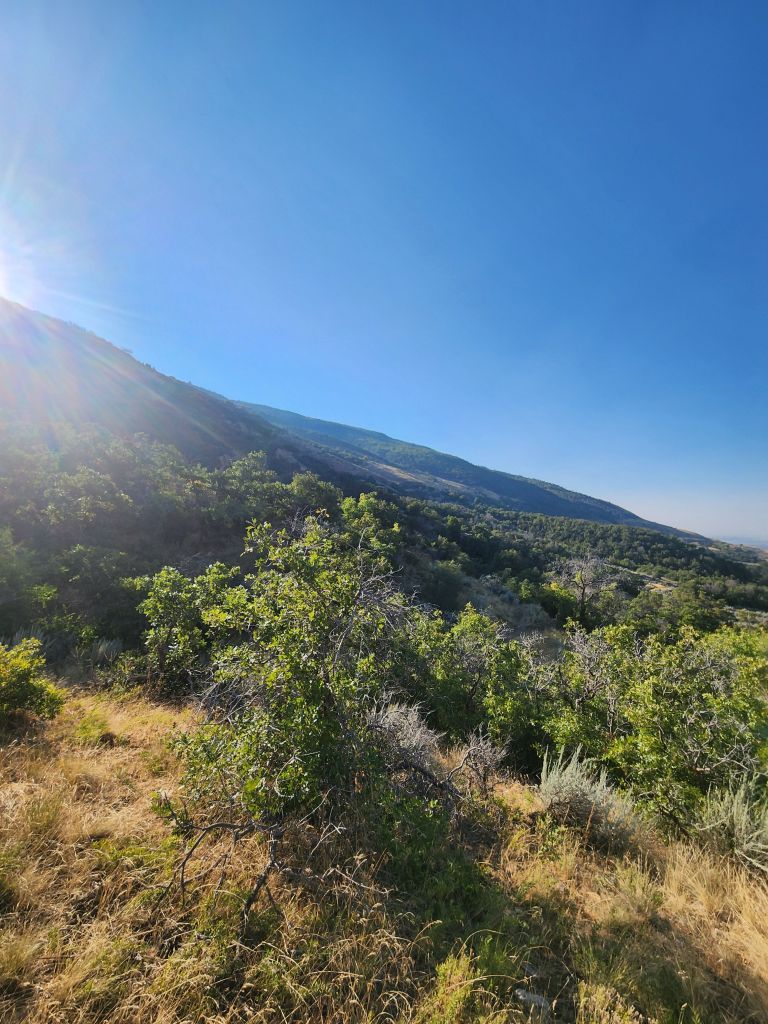
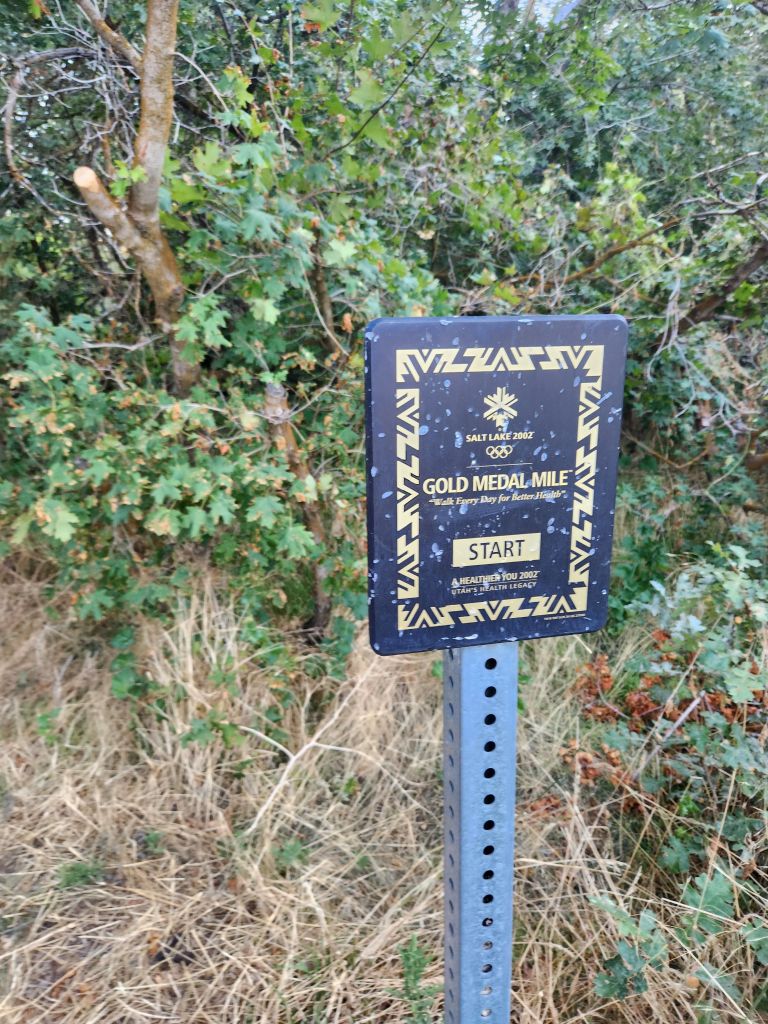
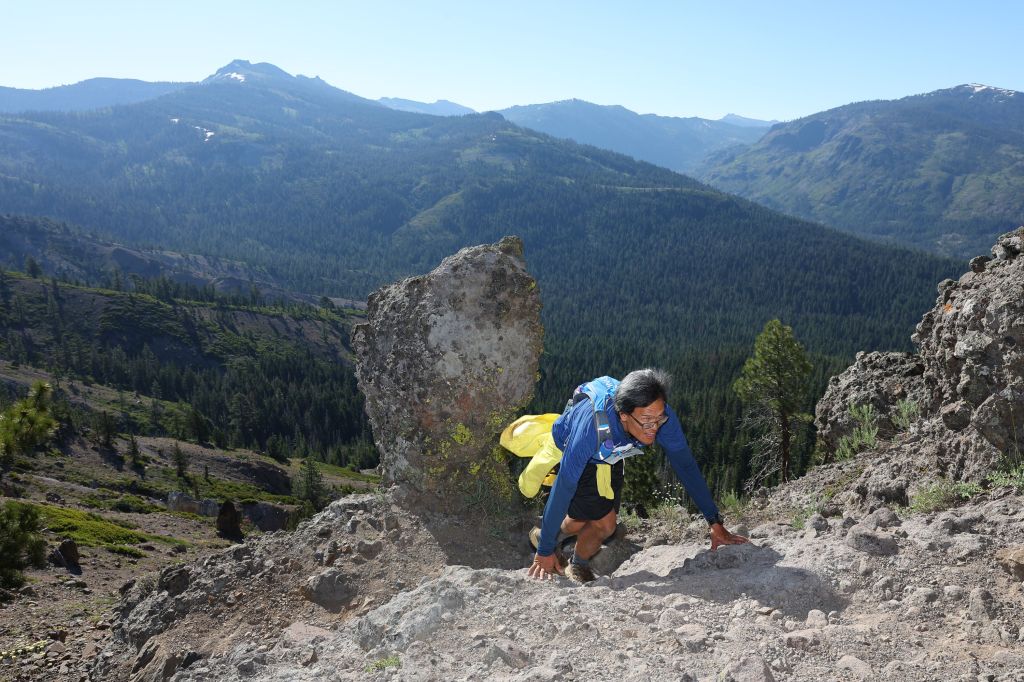
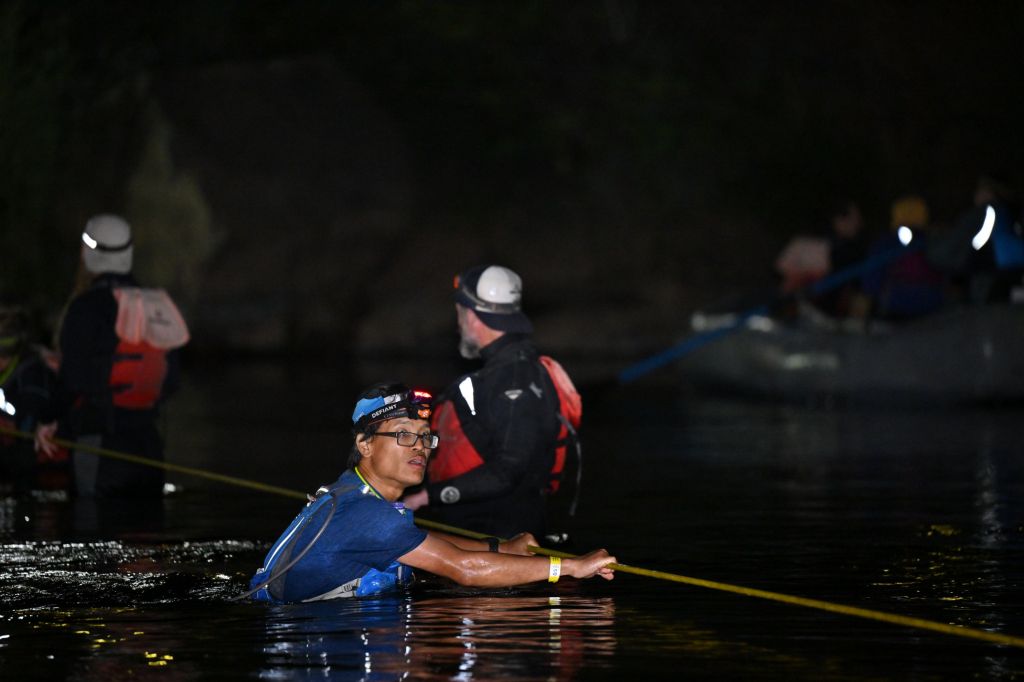
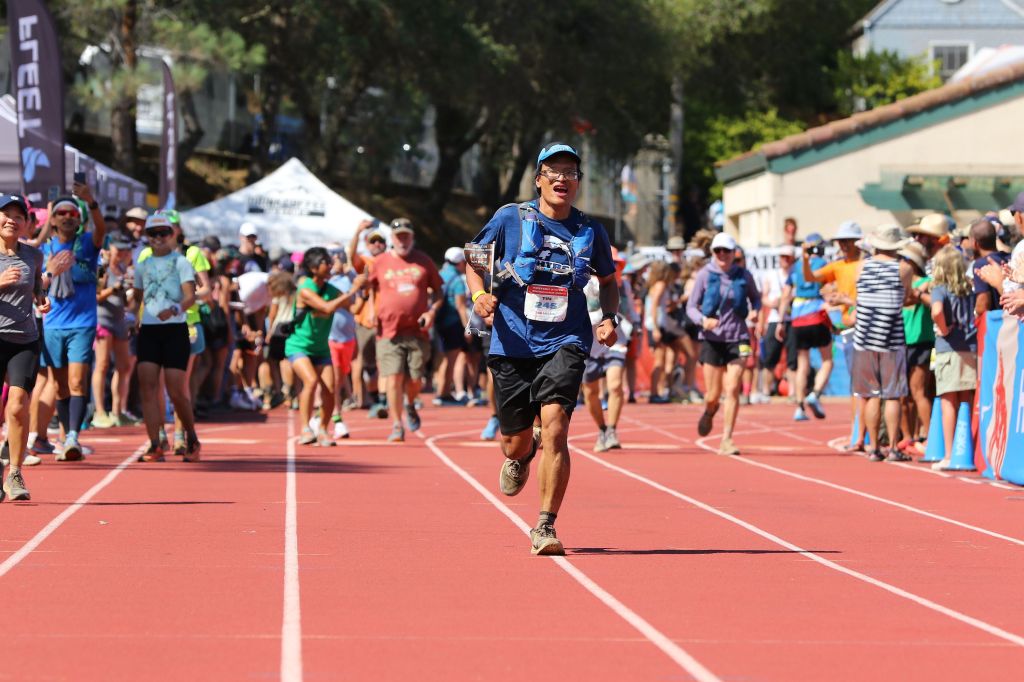
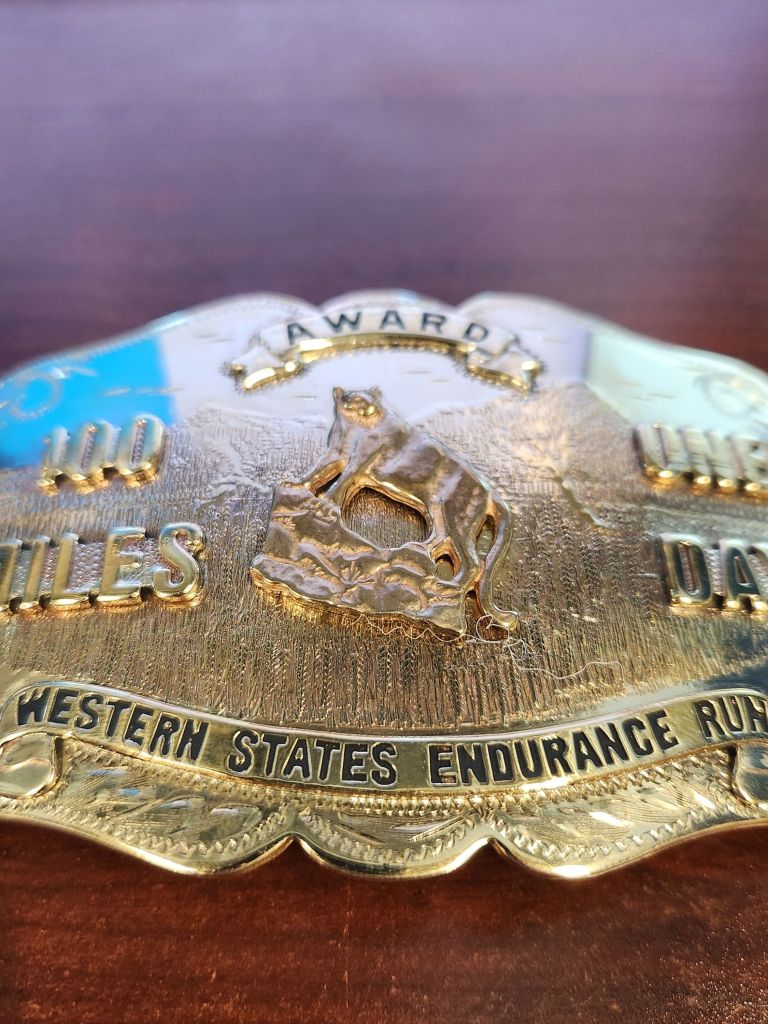
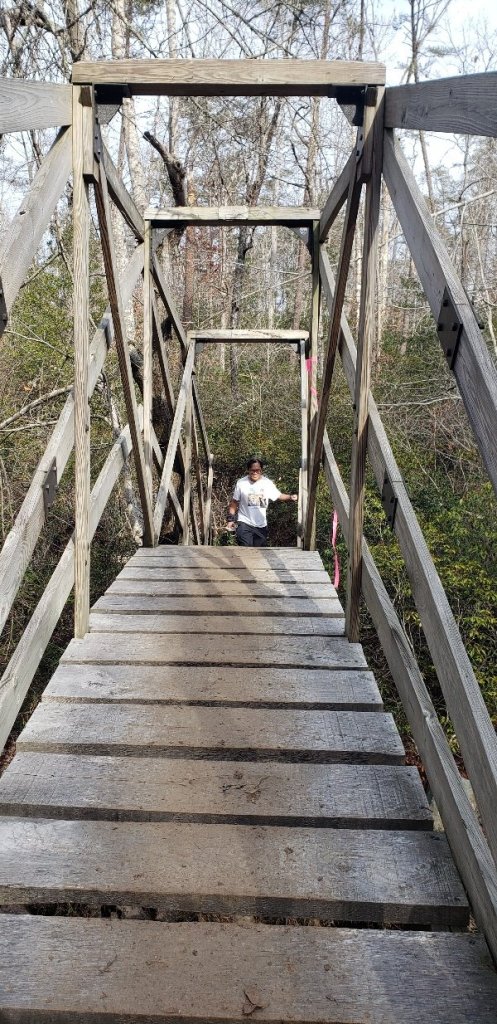
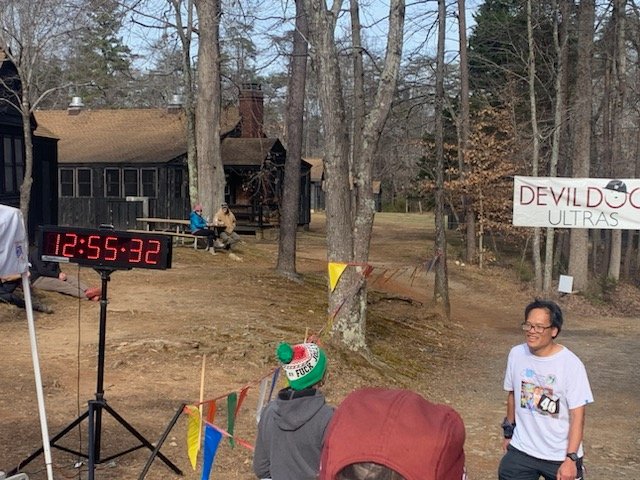
 In awe